Thursday 24

“Displacement”

Published on 24/07/2025

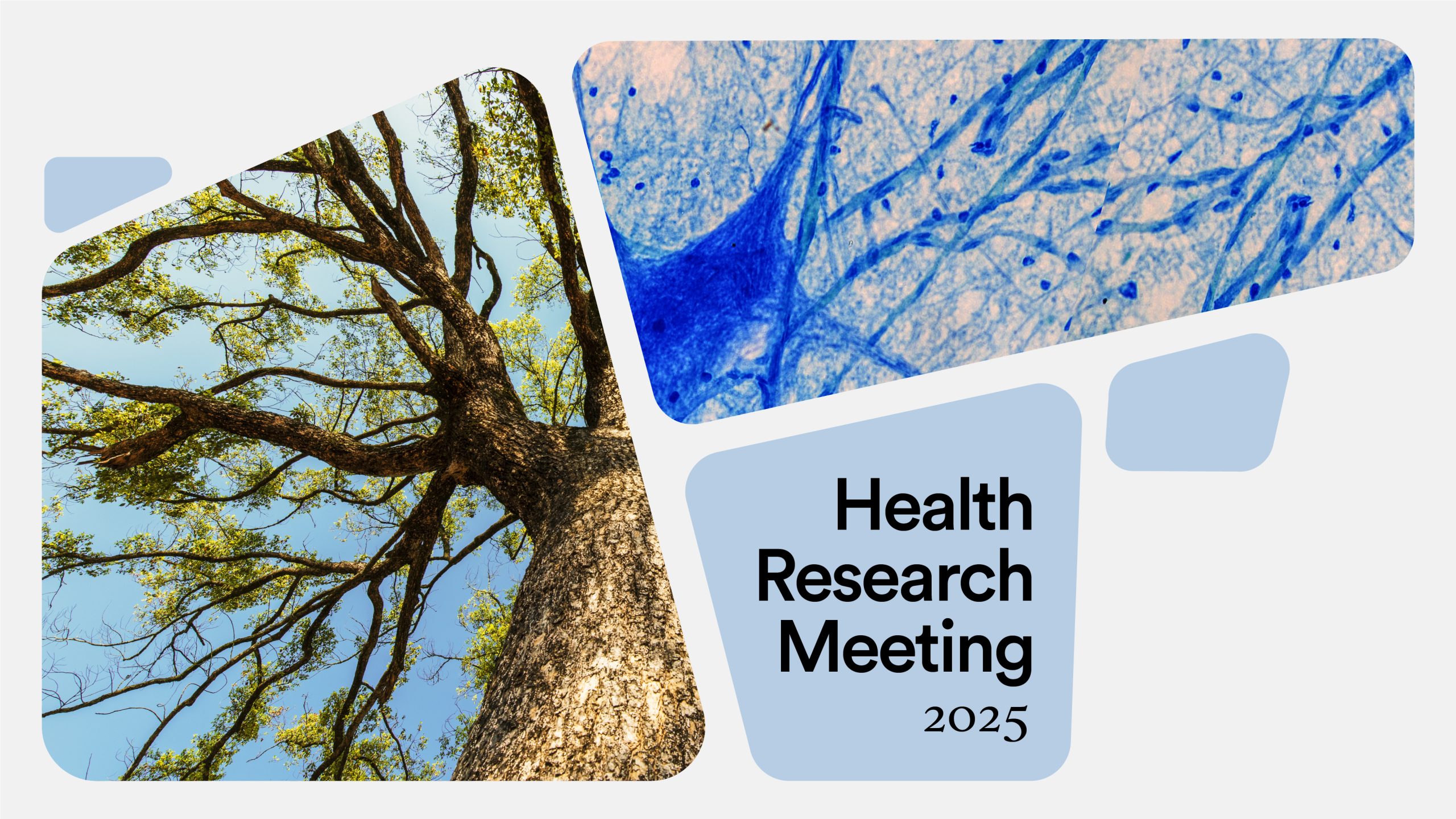
Create, observe, think, correct, rethink… Would you say that these steps form part of the work of an artist, or of scientific research?

Of course, it’s difficult to choose without more context. But if we add paintbrushes and statues to the scene, or alternatively pipettes and microscopes, the answer becomes glaringly obvious. So could we say that, essentially, art and science are more alike than we might have thought?

In this latest CaixaResearch Snapshot we’re joined by David Sancho, a researcher from our network at the National Centre for Cardiovascular Research (CNIC), and Guillermo Mora, a visual artist and ”la Caixa” Foundation fellow.

Share

0
Thursday 26

What toll does stress take on our health?

Published on 26/06/2025

Okinawa, Japan. Sardinia, Italy. Nicoya, Costa Rica. Three points on the map that are far from each other but which, nevertheless, have a surprising feature in common: the life expectancy of their inhabitants is very high, over 100 years.

These are three of the so-called Blue Zones: places where people not only live longer but in better health. So what’s their secret? 

Beyond diet or physical activity, researchers agree on one key factor they all share: their inhabitants live in environments that favour relaxation and social relationships and promote a strong sense of purpose in life, as well as experiencing low levels of stress. 

And this is no minor detail.

Share

0
Saturday 21

«I’m also researching to cure ALS»

Published on 21/06/2025

Something’s changing in the fight against amyotrophic lateral sclerosis (ALS).

For years, this neurodegenerative disease has been synonymous with uncertainty, suffering and limited treatment options. But in recent times, scientific breakthroughs have been painting a different picture: for the first time, innovative therapies, specialised start-ups and initiatives are emerging that offer hopeful results which could truly transform the future of ALS.

This collective drive comes not only from large firms and pharmaceutical companies. It’s also taking shape in universities, hospitals and research centres around the world, where researchers, doctors and experts are working day after day with the same goal: to understand ALS and come closer to finding a cure.

Share

0
Thursday 05

The Invisible Trail of Microplastics

Published on 05/06/2025

“Even when we dispose of it in the right bin, much of the plastic produced in the world ends up in landfill and less than 10% is recycled. With the action of the sun, wind and waves it fragments, releasing microplastics into the environment“, explains Emma Calikanzaros, a researcher in environmental epidemiology and microplastics.

These tiny bits of plastic, which are also released from textiles and cosmetics, travel through rivers, seas and air to reach remote areas of the planet. Studying them is not easy, as they are particles ranging from 0.1 to 5 millimeters, very diverse in shape, size, and composition. “Globally standardised methods to measure their concentration are still lacking but need to be developed.

Share

0
Tuesday 27

“From the minuscule”

Published on 27/05/2025

You’re at a museum. You pass by dozens of paintings until one, you don’t quite know why, catches your attention. It’s not just what you see; it’s what it makes you feel.

Now imagine another scene. A laboratory and, under the microscope, an image. Cells stained with impossible colours, shapes that look like abstract landscapes. You’re not in the Prado but something in that image fascinates you. An image that, moreover, may be the key to a new scientific discovery.

While a researcher creates knowledge, an artist arouses emotions. But the boundaries aren’t always so clear.

Today we talk to Eloísa Herrera,

Share

0
  • Archive