

How old is your heart?
Published on 26/09/2025

In 2015, the British National Health Service (NHS) surprised the entire population with the Heart Age Test, a free online calculator that estimates the user’s ‘heart age‘ with just five basic pieces of information: weight, height, blood pressure, cholesterol and family history.
However, for many people the result was a reality check: 80% discovered that their heart was older than their actual age.
Behind this anecdote lies a disturbing trend: a growing number of heart attacks are being detected in young people, even those under 40. What’s happening? Why is the heart starting to fail earlier? And, most importantly, can we prevent it?
To mark World Heart Day, we spoke to three researchers to get to grips with what’s changing and how prevention, from childhood to adulthood, can help us protect our hearts in time.
Detecting the risk
A ‘heart attack’ occurs when part of the heart stops receiving blood and oxygen and the cells in that area begin to die. The most common cause? A clot made up of fat or cholesterol that has accumulated on the artery walls, preventing the blood from flowing normally.
But is it true that heart attacks are becoming more common in young people? “Cases have increased but the causes are varied” says Borja Ibáñez Cabeza, Scientific Director of Spain’s National Centre for Cardiovascular Research and cardiologist at the Hospital Universitario Fundación Jiménez Díaz in Madrid. “On the one hand, diagnostic tools have improved, enabling us to detect new cases more easily. On the other hand, changes in the population’s lifestyle mean that risk factors now occur at an earlier age”.
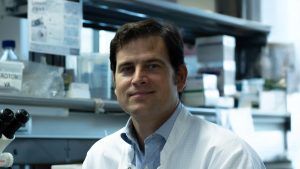
Borja Ibáñez Cabeza
The figures back this up. According to the Spanish Heart Foundation (FEC), 35% of children in Spain have two or more cardiovascular risk factors, such as a sedentary lifestyle, poor diet, being overweight, smoking or consuming other substances.
“The abandonment of the Mediterranean diet and rise in physical inactivity are causing obesity rates to shoot up” warns Borja. “Added to this is the reappearance of smoking among young people, especially some female segments of the population where the figures are even more alarming”.
Despite this, Ibáñez stresses there’s still no need for panic. “We’re not witnessing a dramatic increase in heart attacks among young people but rather a worsening of cardiovascular risk factors across all age groups. It’s a worrying trend but not an alarming one. Rather than panicking, it should make us reflect on how we can improve prevention from an early age” says Borja.
During the pandemic, some media outlets pointed to another possible cause for this increase: COVID-19. But is there any truth to this?
“The association between viral infections and cardiovascular events has been known for decades, for example with influenza. And COVID-19 follows a similar pattern” explains Ibáñez. “It’s not a unique phenomenon but part of what happens with many infections that activate the immune system and increase inflammation. That’s why vaccination is important: it prevents complications which, in some cases, can be serious”.
Beyond lifestyle, there’s another factor—more silent and less controllable—that we must also take into account: a person’s genetics. So what role do genes play?
“In families with a history of cardiovascular disease at an early age, such as men before 55 and women before 65, we tend to suspect a hereditary cause” explains Ramón Brugada, a researcher at the Girona Biomedical Research Institute Dr. Josep Trueta (IDIBGI).
 Ramon Brugada
The problem is that it’s no easy task to identify this genetic risk. “At present, our clinical tools aren’t accurate enough to detect the genetic factors involved” Brugada explains. “They’re highly complex and multifactorial”.
For this reason, his lab is investigating the role played by certain genes related to thrombosis (the formation of blood clots) in early heart attacks. “Everything points to this role and our goal is to develop a genetic algorithm that enables us to identify people at risk before they suffer an event. Only then will we be able to take preventive measures in time”.
Anticipating the effects
One of the great challenges presented by coronary heart disease is its silent progression. Decades can pass from the time it begins to develop until it manifests with obvious symptoms. For this reason, research is focusing increasingly on finding subclinical signs (prior to any obvious symptoms) that allow atherosclerosis to be detected before it causes irreversible damage.
This is the goal of the joint project by Borja and Teresa Matias Correia, a researcher at the Centre of Marine Sciences of the Algarve (CCMAR), which is focused on designing an improved cardiac imaging technique based on magnetic resonance imaging (MRI): non-invasive, capable of detecting ischaemic heart disease earlier and with greater accuracy.

Teresa Matias Correia
“Unlike standard tests such as coronary angiography, which is invasive and only detects significant blockages using X-rays, our technique enables us to see how the blood is flowing through the heart muscle, including the smallest vessels” explains Teresa. “This makes it possible to detect the earliest signs of disease, even when the arteries still have no visible narrowing. This is particularly important in young patients, when changes can be subtle but significant”.
This technology also promises to generate quantitative maps that show, in precise figures, how much blood is reaching each area of the heart. “This adds objectivity and reliability to the diagnosis that goes beyond what can be seen with the naked eye”.
Listening to the signs
Although we tend to imagine a heart attack as something sudden, abrupt and inevitable, the reality is that the body gives us warning signs, although they might not always be obvious.
“Oppressive chest pain, which can radiate to the arm or jaw, is the classic symptom” says Borja Ibáñez. “But more subtle signs may appear, such as digestive discomfort, shortness of breath when exercising or unusual fatigue“. Such symptoms are even more common in women and, in young people, they’re often mistaken for stress or fatigue, which can delay diagnosis.
That’s why, beyond medical prevention, experts insist on the importance of raising awareness among the population from an early age. “It’s essential for young people to visit the doctor, even if they’re healthy, especially if there’s a family history” says Ramon. “And, above all, they should adopt healthy habits and monitor their blood pressure and cholesterol from the age of 20. Such prevention can make a real difference over the years”.
The good news is that science is on our side. “Soon we’ll be able to detect heart problems before any symptoms appear and treat them in good time, even before the person knows they have a problem” Teresa explains. “But technology alone is not enough: we need information, personal commitment and to get rid of the notion that heart attacks only happen to older people, as well as to start taking care of ourselves at a younger age. Because protecting your heart means giving yourself the chance to live longer and better“.