

When our defences “team up” with cancer
Published on 23/09/2025
Tumours have highly sophisticated ways of resisting treatment. Some can metastasise to other organs and tissues, hide from the immune system and influence other cells in the body, even modifying cell behaviour to promote their own growth.
The latter is the case of myeloid cells. Originating in the bone marrow, they play a key role in defending against microbes but they can switch sides when a tumour is present; instead of defending us, they hinder the immune response and help the tumour to grow, promoting the formation of blood vessels that feed it.
But how does this switch take place? The answer is provided in this edition of News From the Lab by Gabriel Rabinovich, Senior Group Leader at the CaixaResearch Institute in Barcelona and Senior Investigator for CONICET, and Ada Blidner, a Researcher for CONICET at the Institute of Biology and Experimental Medicine.
“In a recent study, published in the journal Immunity, we discovered that myeloid cells bind to a protein that is widespread in the tumour environment, called Galectin-1, which alters their function and promotes tumour progression” explains Ada.
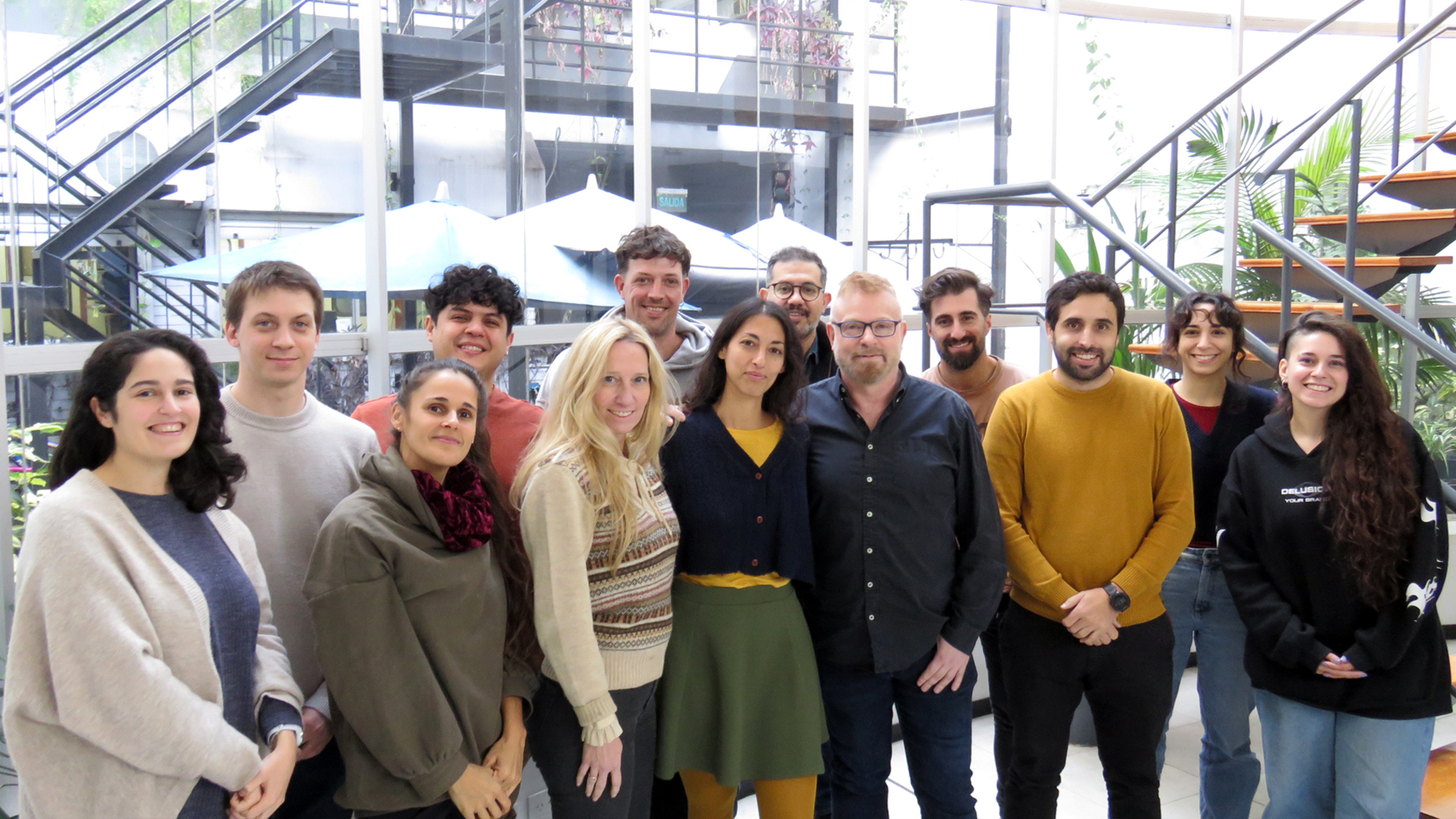
Research group of the Glycomedicine Laboratory, IByME, led by Gabriel Rabinovich.
When analysing samples from cancer patients, the researchers found that Galectin-1 is associated with poorer clinical outcomes and factors that support tumour growth, such as suppression of the immune system and the appearance of myeloid cells that adopt a behaviour favourable for tumours. “In fact, we observed that, when Galectin-1 is blocked, myeloid cells regain their original function” adds Gabriel.
In addition, and unexpectedly, they discovered that, in colorectal cancer, the main producers of Galectin-1 are not tumour cells but another type of cell present in the tumour environment: fibroblasts. “Based on these findings, the CaixaResearch Institute, in collaboration with Dr. Pilar Navarro from the Instituto del Mar, realised that Galectin-1 can also activate a gene in fibroblasts that promotes tumour growth” explains Gabriel Rabinovich.
These findings reinforce the potential of Galectin‑1 as a possible therapeutic target to slow down tumour progression, a line of research promoted by Gabriel Rabinovich at the CaixaResearch Institute, Spain’s first research centre specialised in immunology and one of the first in Europe.
If you’d like to find out more about his work, don’t miss his first lecture as Principal Investigator at the CaixaResearch Institute, a fascinating journey through his scientific career over the past 30 years: link.