

Health Research Meeting 2025: the health knowledge ecosystem
Published on 15/10/2025
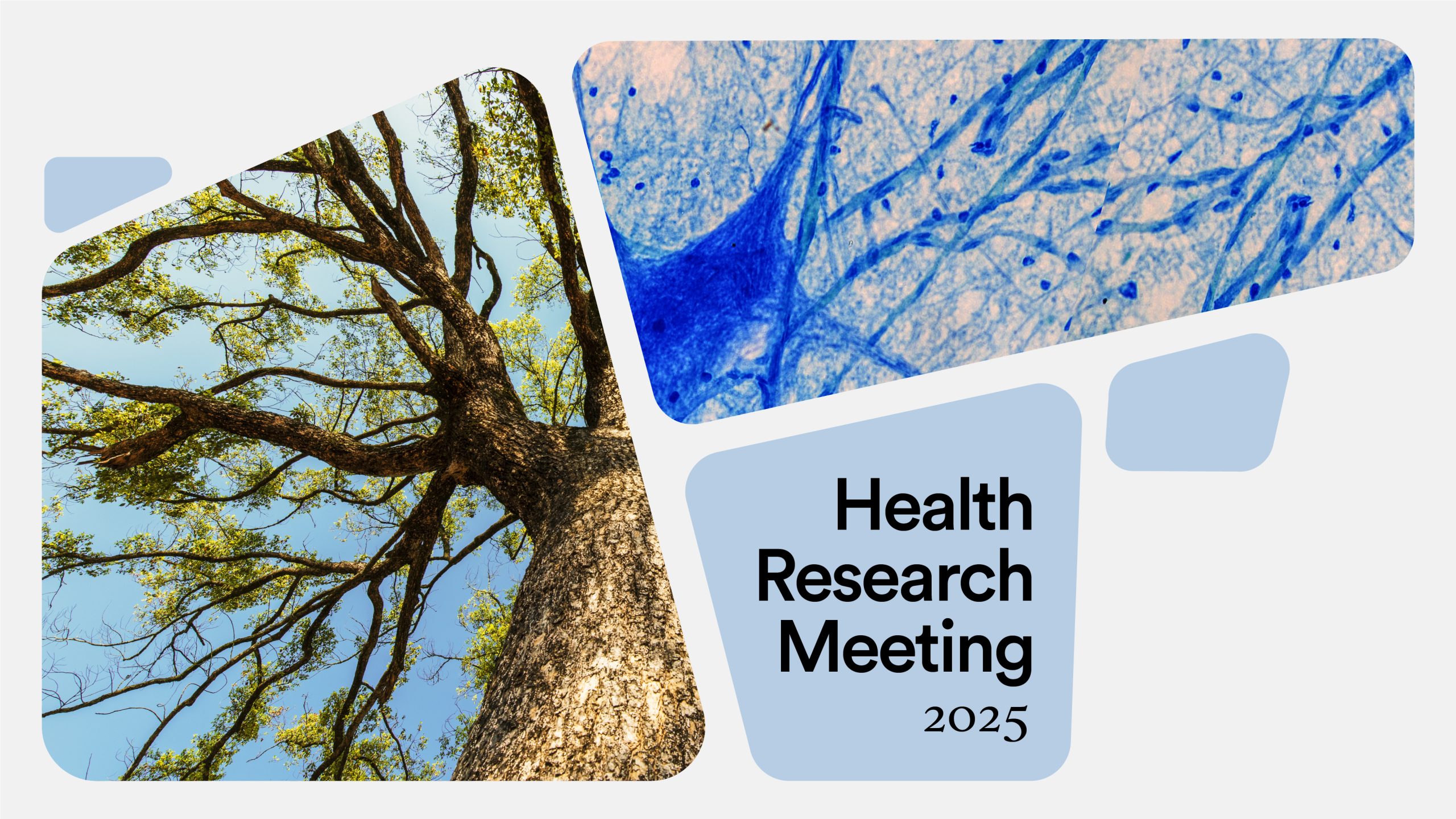
Ideas are like roots that nourish one another.
Every discovery is a new shoot.
Every collaboration, an opportunity in bloom.
Diversity, connection and community are essential for growth.
This was the spirit that defined the fourth edition of the Health Research Meeting. On the 2nd and 3rd of October, science and nature came together to welcome nearly 50 researchers from the 2021 Health Research call at the Cap Roig Gardens. It was two days filled with networking, presentations and open discussions.
This time, the event was moderated by the writer and science communicator Vivienne Parry, and featured contributions from representatives of the Fundación Luzón and the Fundação para a Ciência e a Tecnologia (FCT), strategic partners of the Health Research grants. All of it came together under a single purpose: to explore the major current and future challenges of biomedical research and health innovation.
A space to grow
“Cap Roig is a unique place,” said Àngel Font, Assistant General Manager of Research and Fellowships at the ”la Caixa” Foundation, during the event’s opening. And indeed it is: this 20-hectare garden between Palafrugell and Mont-ras is home to more than 800 botanical species from around the world, creating an exceptional Mediterranean ecosystem.
“That’s precisely the reason for gathering here,” Font continued. “The richness and uniqueness of this space reflect our commitment to growth and invite us, once again, to share, reflect and create knowledge together.”
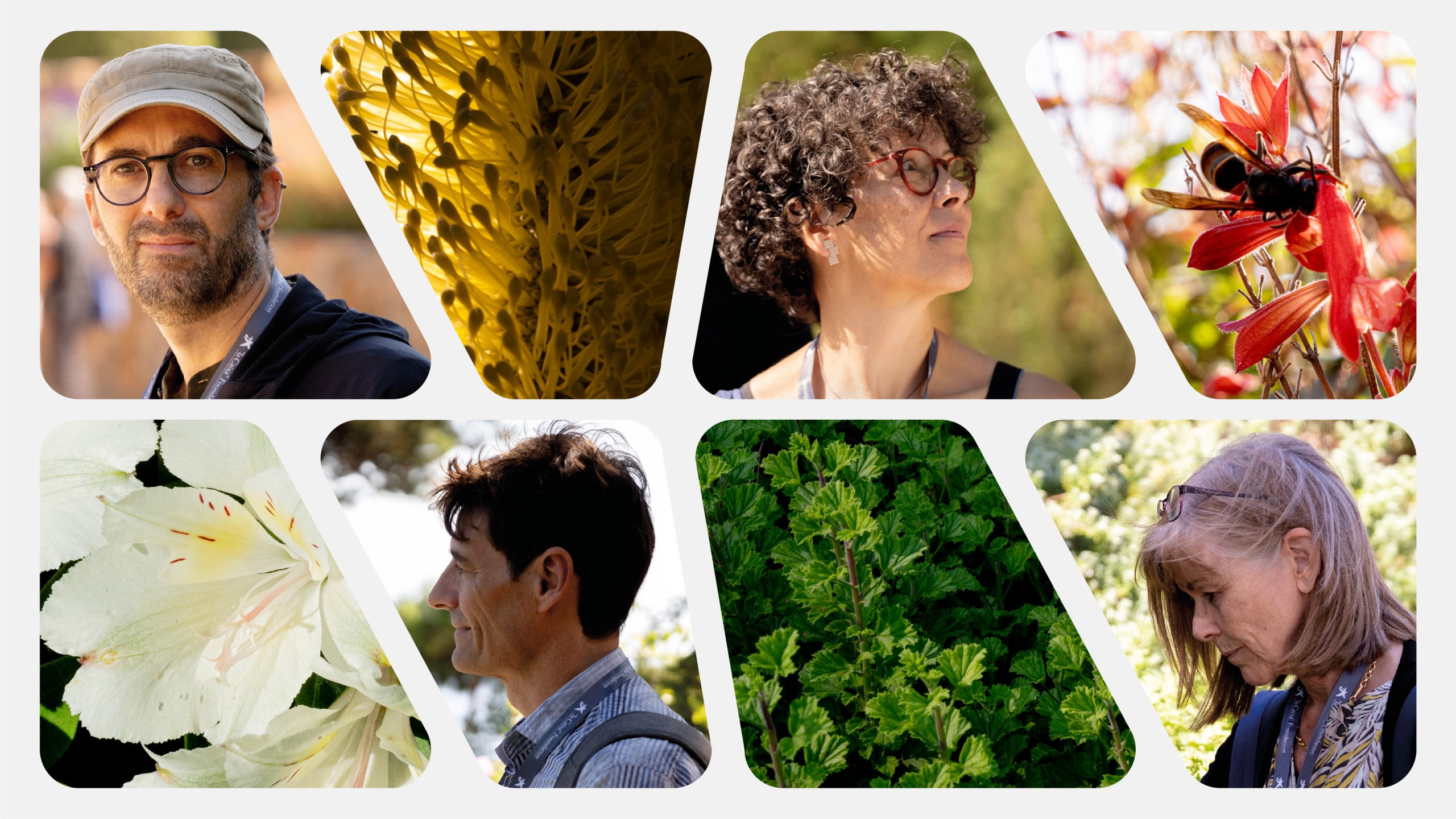
And so, the first day began in the gardens of Cap Roig. Researchers shared their first impressions, expectations and projects in this inspiring setting, and for many it was the first time they met face to face. This is how some of them described the experience:
“The best scientific conversations happen in relaxed settings like this one, where unexpected ideas can emerge.”
Alejo Efeyan, Spanish National Cancer Research Center
(CNIO, Madrid)
“Sharing science in such an inspiring environment is a privilege that will help us grow.”
Esther Julián, Universitat Autònoma de Barcelona (UAB)
“The most valuable part is hearing first-hand about other researchers’ projects. They’re all incredible.”
Jordi Llop, Center for Cooperative Research in Biomaterials (CIC biomaGUNE, Donostia)
“The strength of this meeting lies in the diversity of its participants, which opens up new perspectives and opportunities for collaboration.”
Anne Rosser, Cardiff University, United Kingdom
Decoding diseases, designing therapies
Personalised therapies and early diagnosis are the great challenges in biomedicine. Across two consecutive sessions, eight researchers explained how their projects are tackling these challenges from two different perspectives.
The first part of the scientific sessions focused on the use of hidden “codes” within our cells – from DNA markers to cellular behaviour patterns – as unique “fingerprints” capable of revealing diseases and serving as tools for early diagnosis and prevention.
Liset Menéndez de la Prida (Spanish National Research Council, CSIC, Madrid) opened the session with an example from neurobiology. She explained that hippocampal neurons – the region of the brain responsible for forming memories – are activated in highly precise sequences, as if composing a true “memory code”. Her aim, she added, is “to identify potential disruptions in these patterns that could serve as markers for the early diagnosis of neurological diseases.”
José Bessa (Instituto de Investigação e Inovação em Saúde da Universidade do Porto, i3S, Porto) turned to the field of metabolic diseases to highlight the potential of “marks” in the non-coding DNA of pancreatic cells as possible early indicators of type 2 diabetes. His team is working to identify these markers with the aim of developing more personalised and effective treatments.
Margarida Saraiva (i3S) focused her presentation on the role of genetics – both of the patient and the pathogen – in the variability of immune responses to tuberculosis infection. “Decoding these genetic ‘signatures’ could pave the way for new strategies for tackling the disease,” Margarida explained.
To close the session, Helder Maiato (i3S) presented his research on the “tubulin code”, a marker found in the cell’s cytoskeleton that could help predict drug responses and thereby reduce side effects in breast cancer patients.
The session distilled a clear takeaway: decoding the genetic and molecular signatures of each disease is a decisive step towards precision medicine. One of the speakers, Margarida Saraiva, summed it up as follows (more details in this thread on X and Bluesky):
The second part of the session focused on targeted therapies, designed to deliver treatments precisely where and when they are needed. It showed that these strategies are no longer just theoretical: they already exist and offer significant benefits.
Amadeu Llebaria (Institute for Advanced Chemistry of Catalonia, IQAC-CSIC, Barcelona) presented the case of light-activated drugs. “This technology reduces heart damage after a heart attack, as it allows the treatment to be activated in the right tissue and at the right time for each patient,” he explained.
For his part, Samuel Sánchez (Institute for Bioengineering of Catalonia, IBEC, Barcelona) presented another equally groundbreaking approach: self-propelled nanobots capable of navigating through the bladder and delivering drugs directly to tumours. Their success is already remarkable: by reducing dosage and toxicity, they improve tumour regression in preclinical models.
Miguel Castanho (Gulbenkian Institute of Molecular Medicine, GIMM, Lisbon) addressed one of today’s major challenges: brain metastasis in triple-negative breast cancer. “We’re exploring the use of immunotherapy targeted at specific receptors in the blood–brain barrier, which could enhance the therapy’s effect and improve outcomes for this difficult-to-treat disease,” he explained.
Finally, Ana Martínez (CSIC) presented personalised therapeutic models for amyotrophic lateral sclerosis (ALS). This is a patient-centred molecular approach that enables drugs to be tested more safely and effectively.
They all agreed on one key point: targeted therapies are paving the way for a new generation of medicines: safer, more effective, and better tailored to individual patients. We share more detailed insights from Amadeu Llebaria, one of the session’s contributors, on X and Bluesky.
Health through immunology: a vision from the CaixaResearch Institute
Another session focused on the CaixaResearch Institute – the new European hub currently under construction, dedicated to studying the role of the immune system in disease. Josep Tabernero, Chair of the centre’s Scientific Committee, summed it up as follows: “Immunology is the common thread that connects everything from cancer to neurodegeneration, including infectious and metabolic diseases.”
The institute aims to attract international talent and integrate cutting-edge technologies and computational platforms. Its mission: to accelerate discoveries that can be directly applied to the diagnosis, treatment and public health management of a wide range of diseases.
What will its real impact be on the research ecosystem?
We have gathered our researchers’ answers in the following video (see also this thread on X and Bluesky).
Metrics and merit: research evaluation in transition
In a context where traditional criteria for assessing scientific work do not always reflect the true impact of research, how can we recognise scientific merit?
In the following session, 3a, Ismael Ràfols (UNESCO Chair on Diversity and Inclusion in Global Science, Leiden University, Netherlands) emphasised that current metrics can create inequalities by overlooking interdisciplinary work, innovation and unexpected discoveries. That is why “it’s essential to evaluate research in a multidimensional way, capturing interactions and connections that go beyond simply counting publications.”
Can artificial intelligence help in this process? The discussion made it clear that while AI can ease administrative burdens and overcome language barriers, human judgement remains crucial for assessing creativity and scientific originality.
As an example of these new practices, Ismael highlighted the commitment of the ”la Caixa” Foundation and the CaixaResearch Institute to the Coalition for Advancing Research Assessment (CoARA), which brings together more than 700 organisations dedicated to fairer and more responsible evaluation models. This initiative reflects a shared commitment: to move towards assessment systems that recognise the quality, impact and social relevance of research beyond numbers and traditional metrics.
Want to know more? Watch the key takeaways in this video featuring Ismael Ràfols, and in the following posts on X and Bluesky.
From discovery to delivery: making advanced therapies accessible
Turning scientific breakthroughs into real-world treatments requires overcoming regulatory, structural and financial challenges.
In the following session, Silvia Martín Lluesma, Director of Advanced Therapies at the Vall d’Hebron Institute of Oncology (VHIO), explained how to achieve this, from basic research and clinical trials to marketing authorisation and delivery within healthcare services.
“Each step requires planning, collaboration and sustained funding, as well as the support of institutions like the European Medicines Agency,” explained Sílvia. “Advanced therapies can transform lives, but only if we overcome the barriers that stand in the way of making them accessible to patients.”
You can revisit this and other key insights from her session in this thread on X and Bluesky, and in this video:
Global changes and uncertain times: competing for talent and trust
Geopolitical, economic and technological shifts are also shaping scientific progress on the international stage. In the final session, Javier Solana, Chair of the Scientific Committee of the ”la Caixa” Foundation, and Jorge Juan Fernández, Director of Innovation at Hospital Clínic de Barcelona, discussed the challenges and opportunities that lie ahead.
One of the key issues is funding: “It fluctuates rapidly,” explained Jorge Juan. “Public support is being reduced in some regions, and there’s growing dependence on industry.” Added to this is the global competition for talent, intensified by changing migration policies, and the challenges posed by adopting artificial intelligence in healthcare, which go beyond technology itself, affecting infrastructure, integration and energy consumption, which is enormous.
Despite the complexity and instability of the moment, both speakers agreed that these challenges also create opportunities. As Jorge Juan pointed out, “Scientific advances alone do not guarantee commercial success or public trust.” In fact, he reminded the audience that “the key lies in learning to navigate uncertainty, applying AI responsibly, adapting to global change and safeguarding scientific credibility.”
Explore the key ideas in this summary video by Jorge Juan Fernández (more information in this thread on X and Bluesky).
A seed of change
This year’s Health Research Meeting closed with a shared reflection: science moves forward not only in laboratories, but also through dialogue, cooperation and a commitment to people.
“We have a responsibility towards the future we want to build, one where science and humanity come together,” emphasised Josep Maria Coronas, General Manager of the ”la Caixa” Foundation. And Javier Solana, Chair of the Foundation’s Scientific Committee, stated firmly: “Given the current global situation, this is not a time for science to pause and reflect, it is a time to stop and act.”
And so, once again, the Health Research Meeting unfolded over two vibrant days in the fertile setting of Cap Roig, a place where ideas blossomed, connections branched out, and new seeds of knowledge and collaboration began their journey to build bridges between health research and society.