

“The very instant of a cosmic blast”
Published on 12/11/2025
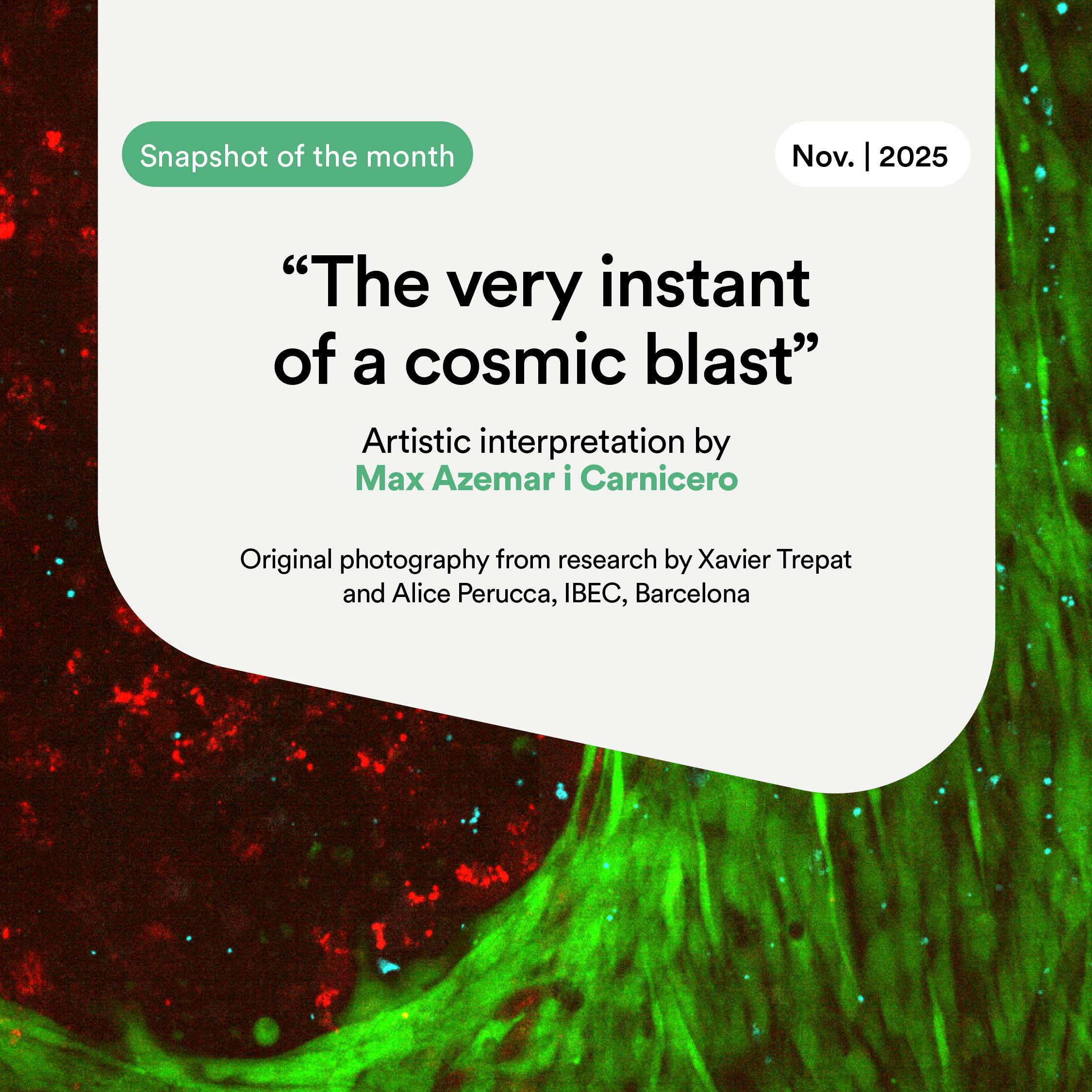
In art, what we see at first glance rarely tells the whole story. Looking beyond the obvious helps to reveal hidden details and creates unique interpretations and perspectives that can change our conception of a work.
The same is true in science. Until recently, cancer research tended to focus on the tumour: its shape, the weak points in the tumour’s cells… But now we know that, beyond the tumour itself, understanding its environment and how it interacts with other cells can alter how we study it and steer the design of new therapies.
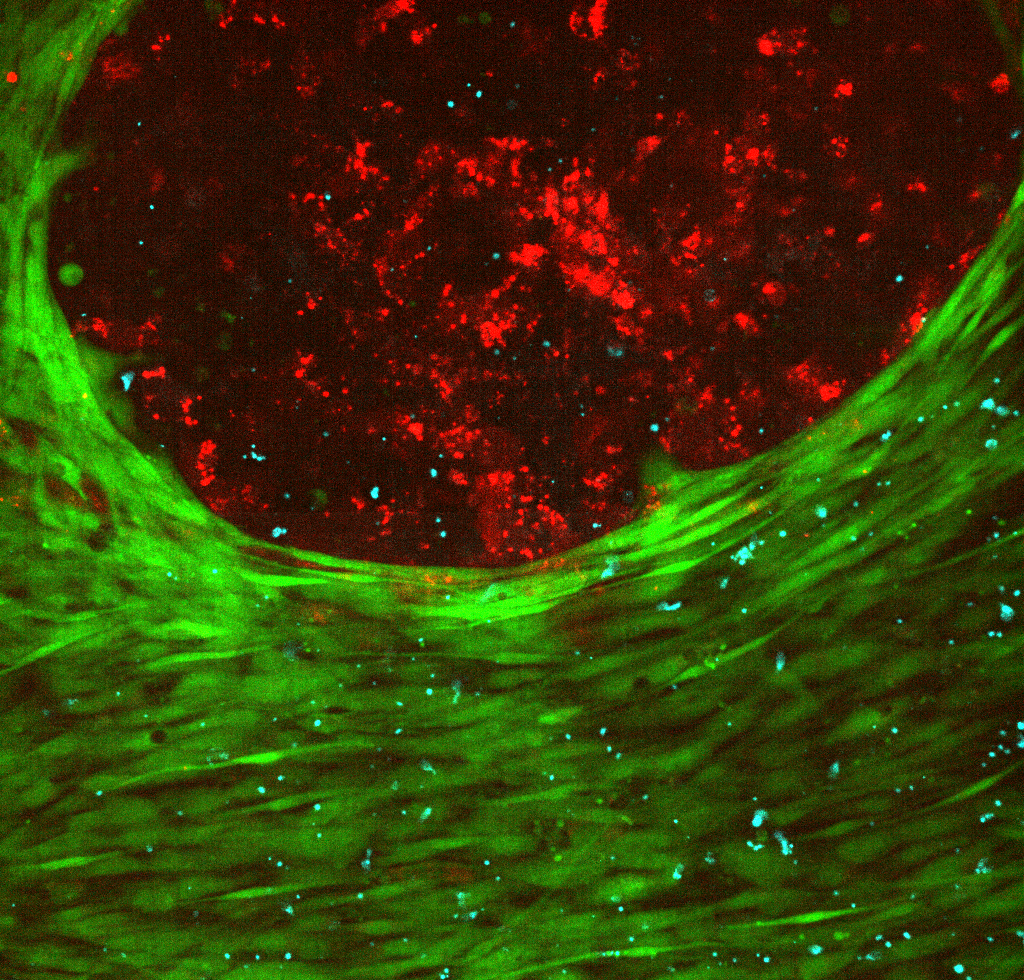
In this latest Snapshot of the month we’ll discover, together with Alice Perucca from the group led by the CaixaResearch Health researcher Xavier Trepat at the IBEC and the artist and ”la Caixa” Foundation fellow Max Azemar i Carnicero, how to explore new perspectives that can turn a scientific image into art and, at the same time, inspire advances in cancer research.
We’ll start with you, Max. What does this image convey to you?
Max (M): The image’s bright colours are reminiscent of an explosion of light. Both the movement of the textures and also the fact that the two planes are on a dark background could suggest that it’s an image of the very instant of a cosmic blast, the contents of an colossal mass that’s overflowing or a force of energy that can only be stopped by a still image; as if it were the northern lights, a rave, or a fragment of the Flubber character created by Philip Brainard (Robin Williams in the 1997 film).

Max Azemar i Carnicero, “la Caixa” Foundation fellow and MFA in Parsons, The New School, New York.
Does it remind you of any artist’s work or style in particular?
M: Its ghostly transparency, the image’s texture and bright colours remind me of how absinthe used to be depicted at the end of the 19th century by the Impressionists. It was a recurring motif at the time, as the drink was associated with collective delirium, the danger of addiction, nightlife and bohemianism; a fairy or a devil that would lead to madness.
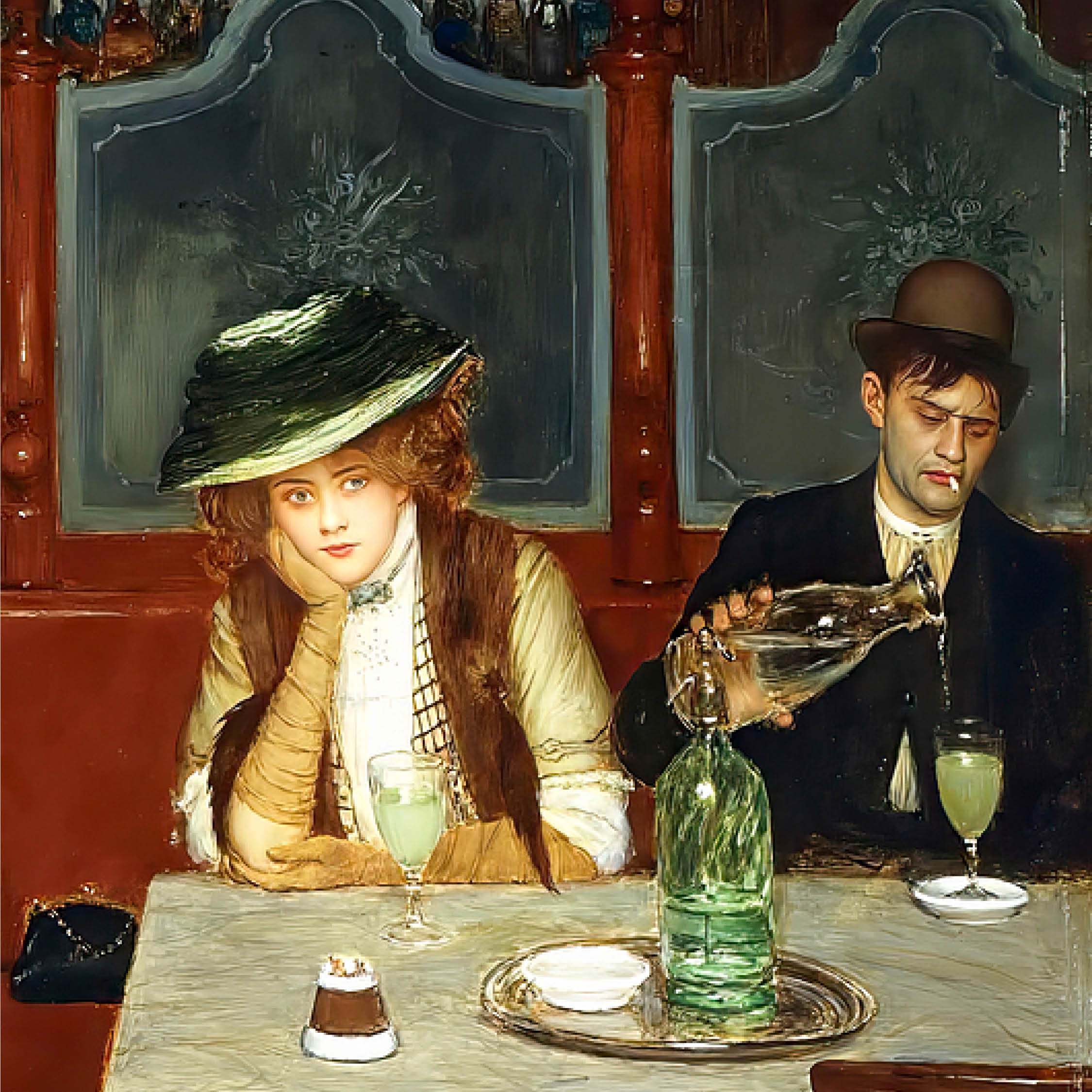
The Absinthe Drinkers. Jean Béraud, 1908-1909.
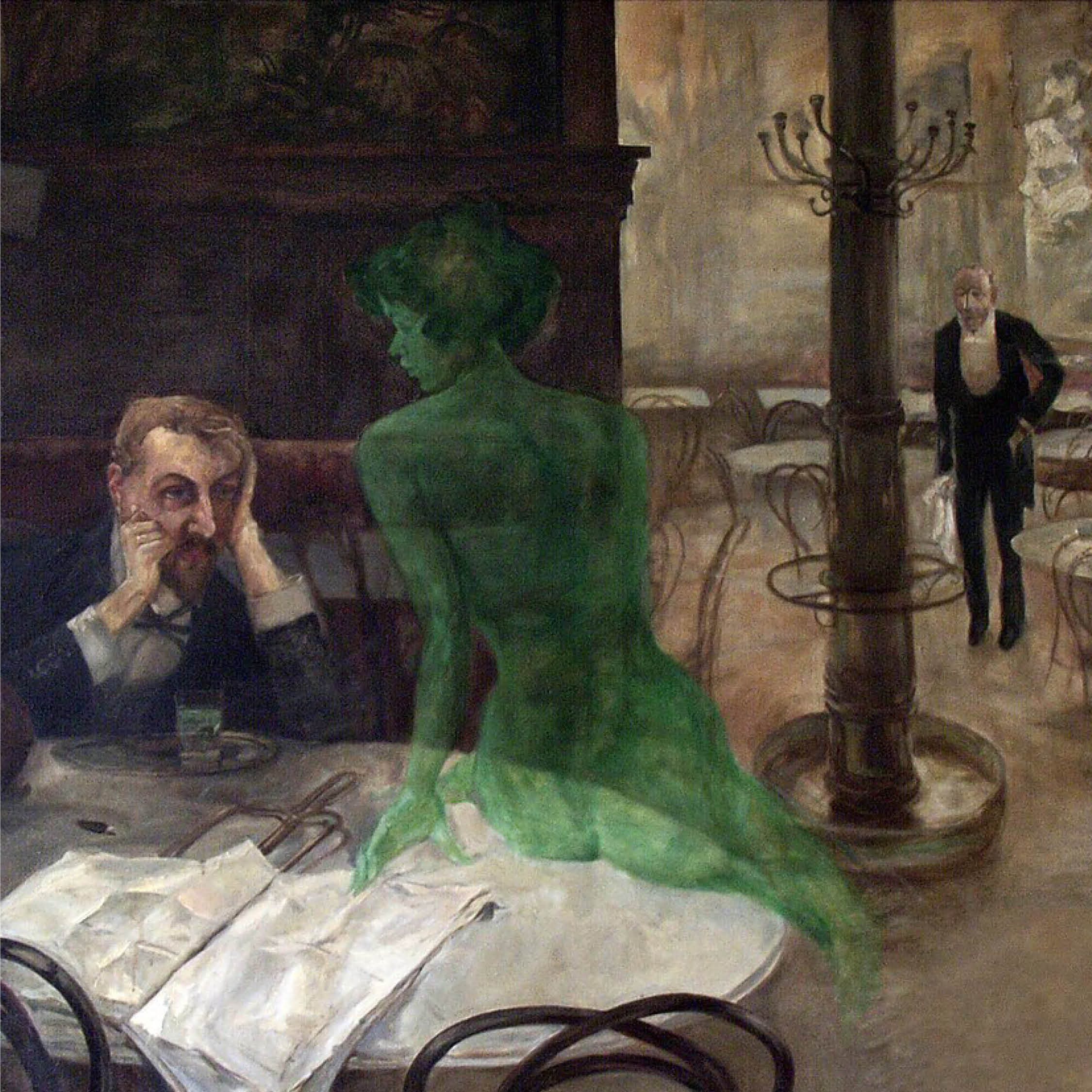
The Absinthe Drinker. Viktor Oliva, 1901.
When viewed in the context of cancer research, this image taken by the team of Xavier Trepat and Alice Perucca tells us something completely different. What are we really looking at, Alice?
Alice (A): This image represents our study’s main finding. We’ve discovered that, in many cases, tumours protect themselves from the immune system by “allying” with the cells in their environment, such as cancer-associated fibroblasts. In the image, the fibroblasts (in green) have formed a barrier that prevents the immune cells (in cyan) from reaching and eliminating the breast cancer cells (in red).
What’s the main problem your research hopes to resolve?
A: Our work is aimed at a major challenge faced by immunotherapy: a lot of patients don’t respond or stop responding to treatment and we still don’t fully understand why. We know that the tumour environment, the tumour microenvironment, can block the action of immune cells but it’s difficult to study how this happens without models that faithfully reproduce this situation.
To address this challenge, we’ve developed MIRO, a “chip” that contains cells and realistically reproduces a tumour and its environment. With this, we can observe how these fibroblast barriers hinder the action of the immune system and limit the effectiveness of some treatments, which will allow us to explore new therapeutic strategies to combat cancer.
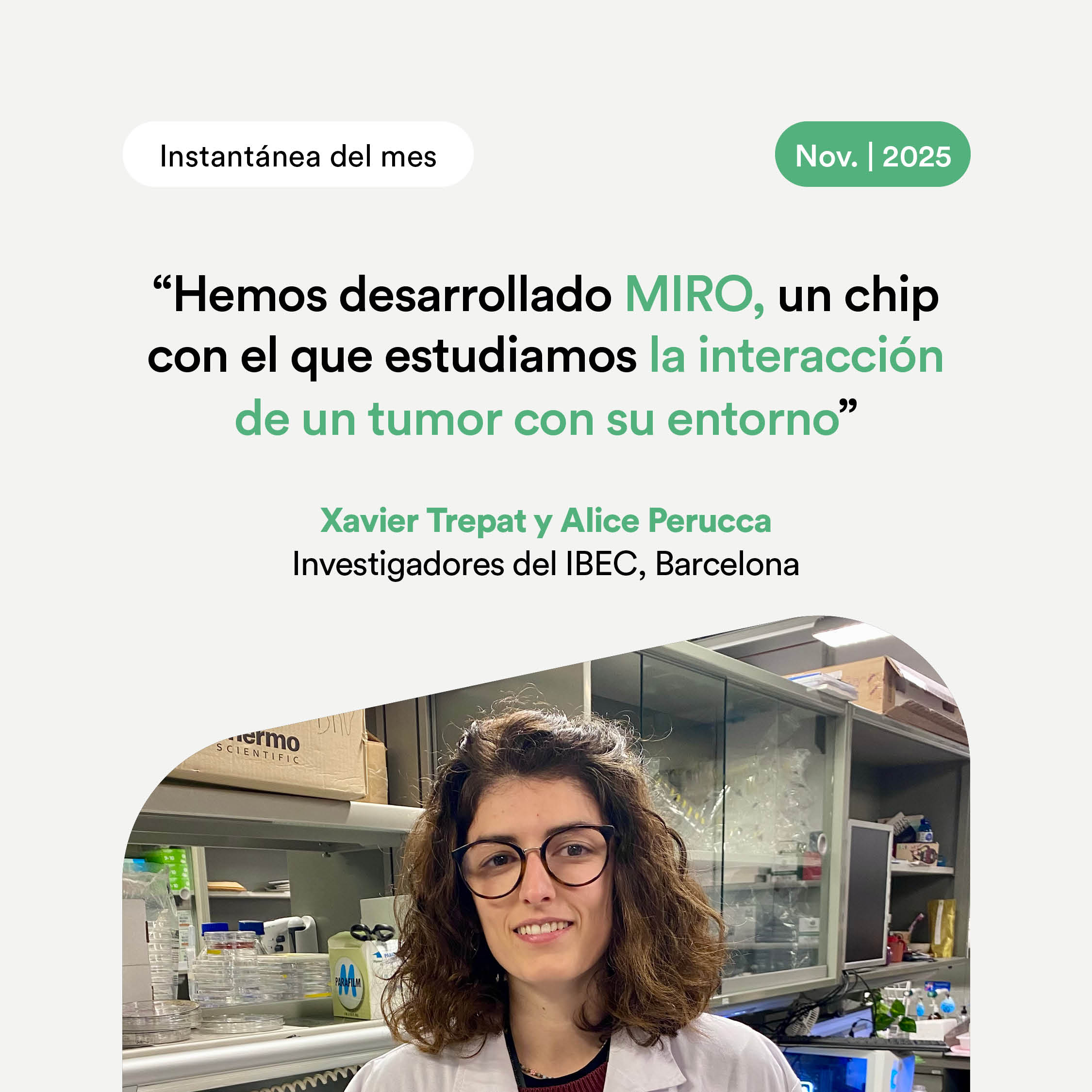
Alice Perucca, researcher at the IBEC.
What impact do you think your project will have on society?
A: This could have a major impact, helping to understand why some people don’t respond to immunotherapies and providing a tool to study this. In the long term, it could help to develop more effective and personalised therapies, improve patient outcomes and reduce unnecessary treatments.
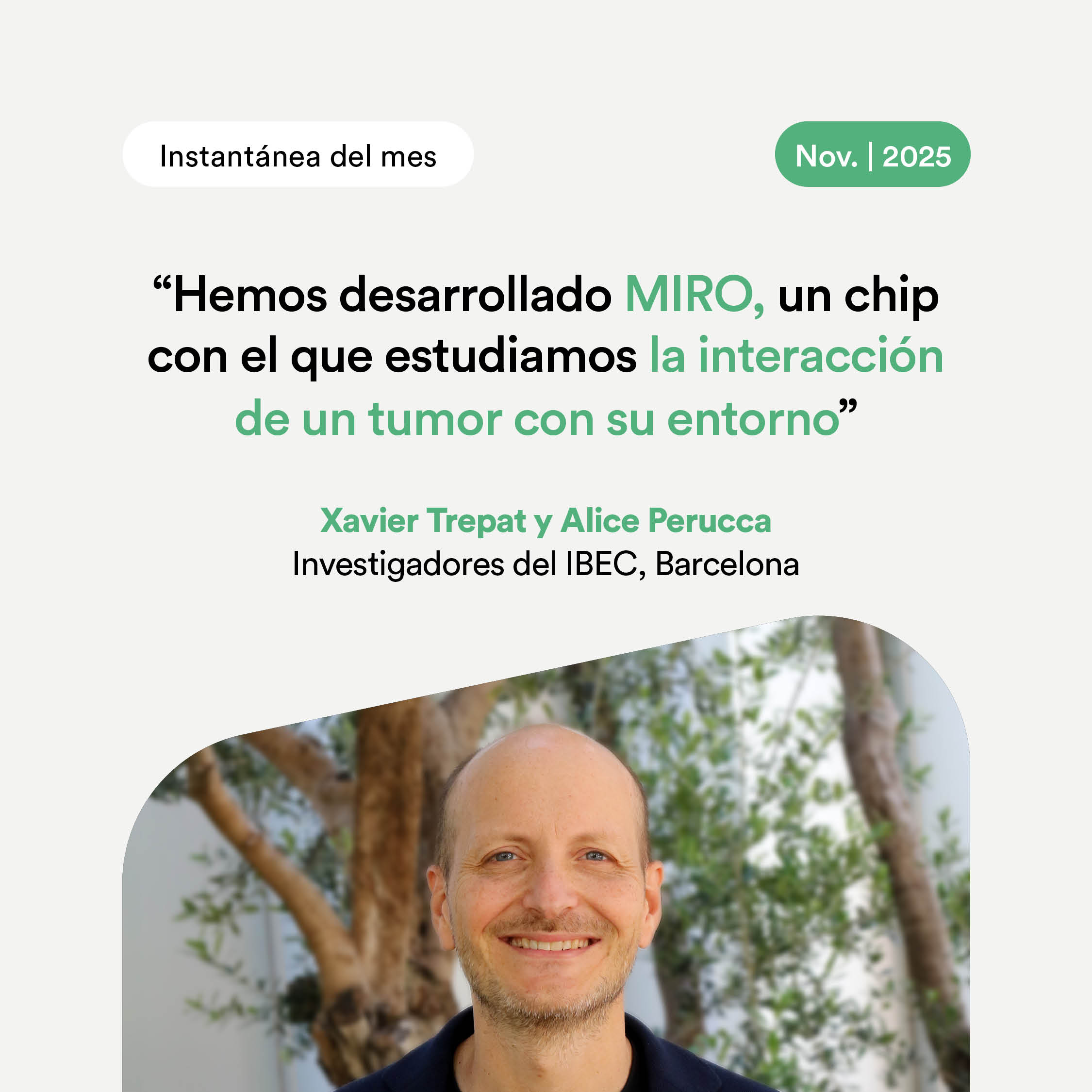
Xavier Trepat, Health Research investigator at the IBEC.
Finally, we’d like you both to answer one last question. What do you think is the relationship between science and art?
M: Although art and science are still seen as two opposing fields of knowledge, since one is supposed to be based on subjective experience and the other on objective study, encouraging this dichotomy is detrimental to both. Science needs methodologies similar to those of contemporary art in order to encourage creative curiosity and thinking outside the box. On the other hand, art makes use of scientific attitudes to gain legitimacy and pass on knowledge.
A: In my opinion, science and art are very connected. Both seek to explore, understand and represent the world, albeit with different tools. Science uses experiments and data whilst art uses creativity and emotions. Both scientists and artists observe details, make connections and look for new ways to express ideas. The creativity that can inspire a work of art can also drive scientific discoveries, and scientific advances can inspire new forms of art.