

Rewriting the menopause
Published on 28/10/2025
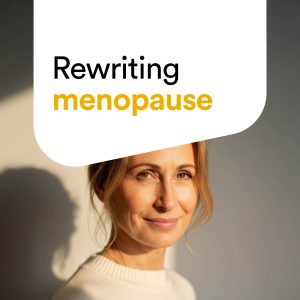
Sadness, brain fog, pain during sexual intercourse, loss of memory, bone mass and libido, incontinence, migraines, hot flushes, the risk of heart attack and insomnia.
These aren’t the potential side effects of an aggressive treatment but rather the symptoms of menopause: a stage that all women go through (and many will spend a third of their lives in) but about which we know very little, both medically and socially.
According to a review published in the journal Cell, 85% of women going through menopause are not receiving any effective, regulator-approved treatment. Fortunately, this gap, in both resources and care, is beginning to be filled. People are talking more and more about the menopause, investment in research is increasing and the shelves are filling up with products (albeit with varying degrees of scientific basis) that promise to alleviate its symptoms.
The menopause is finally leaving the realm of taboo and moving into the spotlight, dominating scientific and social discourse and also capturing significant market share. So perhaps it’s time to examine how well we understand its impact on physical and mental health. And, above all, the effective treatments already available and those in the pipeline.
The figures
“We define menopause as the disappearance of the menstrual cycle for more than 12 consecutive months, which normally occurs between the ages of 45 and 52” explains Dr. Glòria Borràs, gynaecologist and “la Caixa” Foundation fellow. “Before that, at around the age of 40, perimenopause sets in, a stage in which irregularities in the ovarian cycle and the first symptoms appear”.
“When the menopause arrives depends on each woman’s ovarian reserve; in other words, the quantity and quality of her ovaries” adds Dr. Borràs. When this reserve is depleted, oestrogen and progesterone hormone levels plummet, and that’s when some of the more than 40 symptoms associated with the menopause begin to manifest themselves.
The figures are staggering. According to the Spanish Association for the Study of Menopause (AEEM), more than 90% of women suffer from one or more symptoms and for 25% to 50% these symptoms are severe. 80% experience neurological alterations such as insomnia and hot flushes, caused by the brain attempting to regulate the body temperature. More than 50% report signs of depression and around 60% mention brain fog and memory lapses.
Such figures point to situations that “affect not only health but also work, personal relationships and quality of life” says Dr. Borràs. And it’s precisely this impact, both individual and collective, that has placed menopause centre stage. But why now?
A social and economic phenomenon
Demographic pressure has been a key factor. As pointed out by the WHO, society is ageing and, in 2025, there are over 1 billion women going through the menopause around the world, equivalent to 12% of the global population.
Another reason is the loss of labour productivity caused by its symptoms, estimated at more than $150 billion (€139.557 billion) worldwide, according to the consulting firm Frost & Sullivan.
And, finally, there’s the emergence of the so-called “menopause gold rush“. Companies have now identified a niche market (valued at $600 billion annually) where, for decades, there used to be a lack of knowledge, research and sex education, resulting in an avalanche of products of dubious effectiveness or with prices disproportionate to the benefits.
The first critics, however, have already appeared. In March 2024, an article was published in The Lancet warning of the risks of excessively medicalising this lifestage and calling for a paradigm shift: more information for women, more shared decisions and more support for across-the-board care.
In Spain, the first steps are already being taken. In February, the Congress of Deputies approved, for the first time, a package of measures specifically aimed at the menopause, designed precisely to achieve these three goals.
Are there any alternative treatments?
“We have a large number of supplements and treatments that can be tailored to each woman according to her needs and preferences” replies Dr. Glòria Borràs. “The first step is usually to work on lifestyle: diet, physical exercise and stress management. These factors directly influence the microbiota, which we now know plays a key role in intestinal, vaginal and even brain health”.
“After that, there are nutritional supplements (some of which do have a scientific basis) and non-hormonal pharmacological treatments which are particularly useful for women with contraindications, such as cancer survivors. And, finally, there’s hormone replacement therapy (HRT), based on the administration of synthetic oestrogens that offset the hormonal decline”.
The case of HRT is paradoxical. For years it was the standard option until a study by the Women’s Health Initiative (WHI, 2002) linked it to an increased risk of breast cancer and cardiovascular problems. The impact was immediate: the use of HRT plummeted. However, the authors themselves later acknowledged that the data had been misinterpreted and today HRT is once again supported by an international consensus of medical societies. Even so, in Spain it’s only used by 4% of women with menopausal symptoms and barely 2.3% in the perimenopause, far from the figure of 20% reached in 2000.
Meanwhile, research is advancing towards new avenues that offer specific therapies for specific symptoms. This is the case of Joan Roig, a “la Caixa” Foundation researcher who’s studying the potential of the Klotho hormone as a treatment for osteoporosis. “This protein, known as an anti-ageing molecule, protects us against oxidative, inflammatory and senescent damage” explains Roig, adding “in the lab we’ve seen how higher levels in mice can protect them against age-related osteoporosis”.
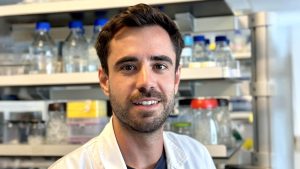
Joan Roig
Now his research team, part of the joint research unit set up by the Autonomous University of Barcelona (UAB) and the Vall d’Hebron Research Institute (VHIR), wants to see if the same results can be obtained with menopause-related osteoporosis. If confirmed, this would pave the way for a new drug with great potential, capable not only of slowing down the disease but also of stimulating bone regeneration.
Finally, beyond traditional treatments, some experts are proposing an even more disruptive alternative: delaying or even eliminating the menopause to avoid its most severe symptoms. This is certainly a controversial proposal but it is certainly stimulating debate regarding the extent to which caring for ourselves in old age is synonymous with concealing or even eradicating it.
A new chapter
“Like so many other aspects of women’s health, for centuries the menopause has been stifled, stigmatised and even associated with hysteria” notes Dr. Borràs.
“But we’re talking about a lifestage in which women accumulate experience, talent and wisdom, and when they can remain fully active in their social, family and working lives. That’s why it’s essential for science and society to reach out to them by offering support, information and appropriate treatments, rather than assuming their decline and marginalising women after the age of 55″ says Dr. Borràs.
At the same time, the expert stresses how important it is for women to “avoid self-treatment. Instead, they should place their trust in the professionals, make sure they have the necessary check-ups and express their needs, both at home and at work”.
Only then will future generations of women be able to rewrite what it means to experience the menopause: with dignity, candidness and the support of scientific, substantiated solutions that will finally allow them to actively and fully enjoy this chapter in their lives.