

News from the Lab 2025. Four pioneering research projects brought to you from the laboratory
Published on 29/12/2025
“They’ve described how the immune system regulates the skin’s resilience”, “They’ve revealed the role played by a group of cells in the aggressiveness of tumours”, “They’ve developed a new vaccine that trains the immune system to attack cancer”…
Behind every headline on social media and in the science and health sections of blogs and newspapers there’s much more than a discovery: there’s dedication, hard work and collaboration.
Every day, researchers and multidisciplinary teams in laboratories, hospitals and universities are working to design new therapeutic strategies and to decipher the mechanisms that give rise to diseases.
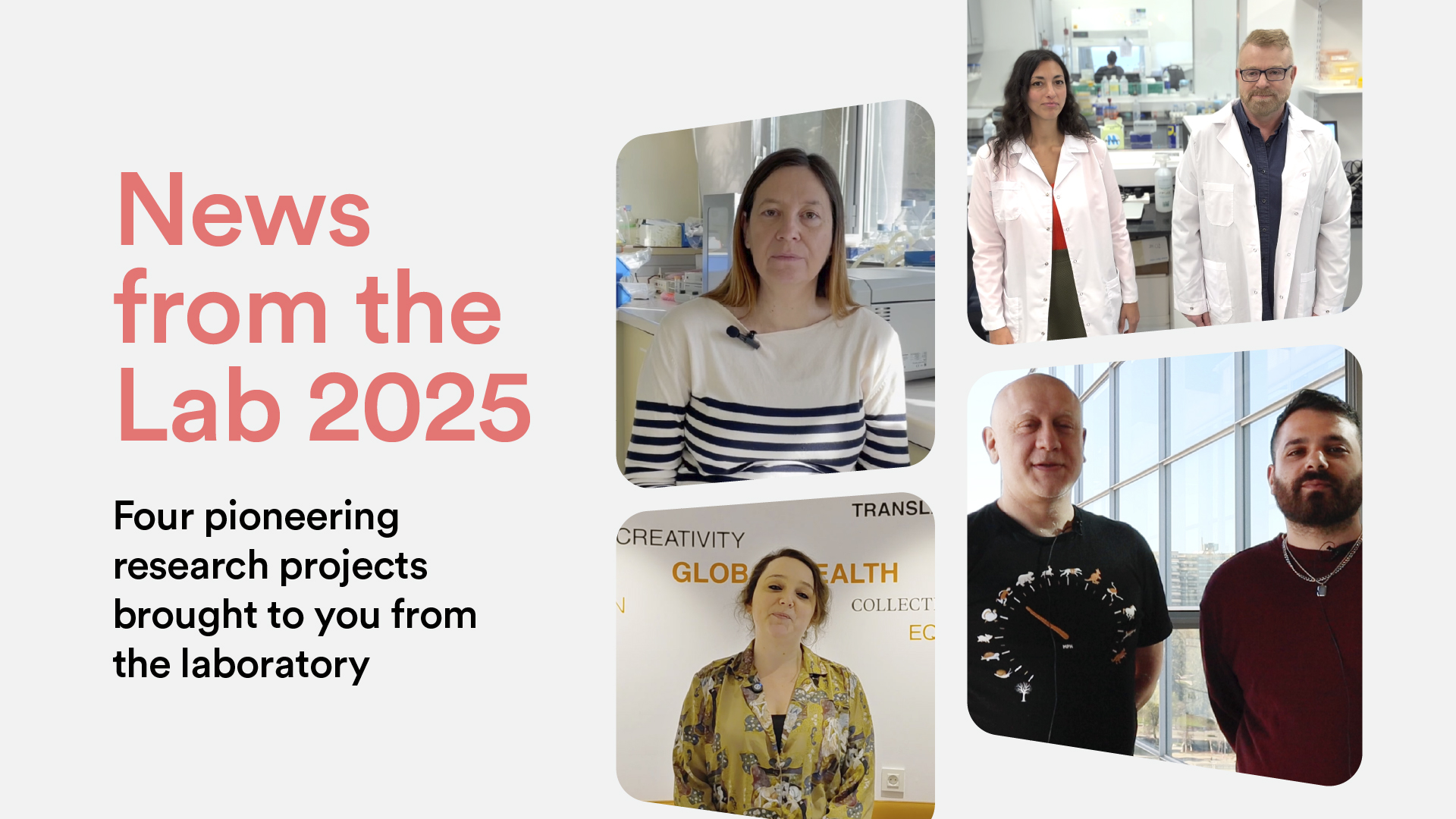
And who better than those people themselves to tell us, firsthand, about their latest breakthroughs and the path taken to achieve them? Today we bring you a compilation of the “News from the Lab” articles published throughout 2025; a window onto the science in action that’s supported by ”la Caixa” Foundation.
The immune system and our skin’s resilience – what’s the connection?
The skin isn’t only the largest organ in our body but is also our first major protective barrier, defending the body from bacteria, harmful chemicals and extreme temperatures. But what do its physical well-being and resilience depend on?
Andrés Hidalgo, Health Research researcher 20218, and ”la Caixa” Foundation fellow Tommaso Vicanolo, both researchers at CNIC, have found the answer in neutrophils. Their findings indicate that this kind of immune cell is capable of modifying the resistance and permeability of the skin. They explain more in their News from the Lab.
When our defences “team up” with cancer
Some tumours can modify the behaviour of other cells in the body to promote their own growth, as is the case with myeloid cells. Originating in the bone marrow, they play a key role in defending against microbes but can switch sides when a tumour is present; instead of defending us, they hinder the immune response and promote the formation of blood vessels that feed the tumour.
But how does this switch take place? Gabriel Rabinovich, Senior Group Leader at the CaixaResearch Institute in Barcelona and Senior Investigator for CONICET, and Ada Blidner, a Researcher for CONICET at the Institute of Biology and Experimental Medicine, provide us with the answer: myeloid cells bind to a protein that’s widespread in the tumour environment, called Galectin-1, which alters their function and promotes tumour progression. Don’t miss their News from the Lab.
Can we train the immune system?
Bladder cancer is one of the most common urological tumours. Its standard treatment consists of administering a vaccine called BCG directly into the bladder to activate the immune system and slow down the disease. But there’s a limitation to this approach: it doesn’t always prevent relapses or stop tumour progression.
The research team from IrsiCaixa and from the Germans Trias i Pujol Research Institute, in collaboration with Archivel Farma, have proposed an innovative solution: RUTI®, a vaccine based on fragments of Mycobacterium tuberculosis that activates and prepares the defences so that, when the BCG arrives, the immune system’s response is faster and more powerful. Cecilia Cabrera, the study’s Principal Investigator, explains all in their News from the Lab.
Ultrasound and AI to diagnose childhood meningitis
Meningitis is a disease that inflames the membranes protecting the brain and spinal cord and it can be fatal if not detected and treated in time. It poses a serious risk for the health of children, especially in low-income countries where early diagnosis is more problematic.
At present, meningitis is detected via a lumbar puncture, an invasive procedure that entails risks and has considerable practical limitations. To overcome these barriers, Sara Ajanovic’s team at ISGlobal, a centre promoted by ”la Caixa” Foundation, has been involved in developing and validating NEOSONICS, an innovative, non-invasive tool by the start-up Kriba, based on ultrasound and deep-learning techniques, that could transform the diagnosis of childhood meningitis. Hear all about it in their News from the Lab.