

Mental health: the great unfinished business
Published on 30/10/2025
45% of people will experience a mental health issue at some point in their lives. In fact, mental disorders are now the leading cause of disability worldwide in all age groups, surpassing any other health problem in terms of impact.
Anxiety, depression, addiction, bipolar disorder and schizophrenia are just a few examples of conditions which, despite their prevalence, are still affected by stigma and barriers to their diagnosis and treatment.
For decades, the debate around mental health has oscillated between two poles: those who prioritise biological factors and those who emphasise social determinants. However, the latest research shows that this dichotomy is artificial, hindering progress in truly understanding these disorders. For this reason, science is currently seeking to integrate both approaches, recognising that a person’s genetics and neurobiology are in constant interaction with their environment, living conditions and personal experiences.
In addition to their symptoms, people with mental health issues often face social incomprehension and a lack of appropriate healthcare resources. In Spain, mental health has tended to be neglected: public investment is far below the European average and the shortage of professionals creates endless waiting lists. This leads to an over-reliance on medication placing the country at the top of table in terms of the global consumption of anti-anxiety drugs and tranquillisers. Added to this is another particularly worrying statistic: more than ten people commit suicide every day in Spain and it has become the leading cause of death among the country’s young people.
Experts agree that psychiatry and mental health currently face three major challenges: prevention, improving diagnosis and treatment through genetics and personalised medicine, and new therapeutic approaches, both pharmacological and psychotherapeutic, or indeed a combination of the two.
All these issues—and many others—were the focus of the latest ”la Caixa” Foundation Health Research Debate, held on 22 October, which featured three experts:
- Enrique Baca García is Corporate Head of the Department of Psychiatry and Clinical Psychology at the Jiménez Díaz Foundation, coordinating the hospitals from the Quirónsalud Group that form part of the Madrid Health Service. He’s also Professor of Psychiatry at the Autonomous University of Madrid.
- Josep Maria Haro Abad is Director of the Teaching, Research and Innovation Unit at the Parc Sanitari Sant Joan de Déu in Sant Boi de Llobregat, a Researcher at the Sant Joan de Déu Research Institute and CIBER Mental Health, and Adjunct Professor of Medicine at the University of Barcelona.
- Víctor Pérez Sola is Director of the Healthcare and Medical Division at the Hospital del Mar in Barcelona, a Researcher at the Hospital del Mar Research Institute and CIBER Mental Health, and Professor of Psychiatry at Pompeu Fabra University.
Below, we review the main ideas addressed by these three experts during the Debate, which was moderated by Esther Armora, Science and Health Correspondent at the ABC newspaper.
The prevalence and impact of mental health disorders
How do mental health disorders affect the population?
“The vast majority of these disorders begin in childhood and adolescence: 60% of adults who experience a mental disorder have already suffered one at these ages, although not necessarily the same one. This means we must start to concern ourselves with all these problems in childhood and adolescence, because that’s when a large number of risk factors are likely to develop.” – Josep Maria Haro
What are the most prevalent disorders?
“Anxiety disorders and depressive disorders, each one of which affects 10% of the population. Specialists are also concerned about potentially serious disorders such as schizophrenia and bipolar disorder, although we realise that anxiety and depressive disorders can also become serious and lead, for example, to suicide attempts, a considerable number of which are unfortunately successful.” – Josep Maria Haro
Does the increase in the perception of mental disorders reflect greater social awareness?
“We faced an extraordinary situation five years ago, namely the pandemic and social isolation. These circumstances created extreme stress, with an increase of up to 70% in the incidence of mental disorders. This raised the profile of mental health issues in society, so it could be that part of the increase is also due to the fact that, today, we’re more aware and more open to talking about them, whereas before a lot of cases were hidden because of the stigma.” – Josep Maria Haro
Who suffered most from the effects of the pandemic on mental health?
“Contrary to popular belief, it was young people who were most severely affected. During the teenage years, social relationships are fundamental for a young person’s sense of independence and personal development. Younger children also suffered, as the isolation affected their development of language and social skills.” – Josep Maria Haro

Esther Armora
Biological factors versus social determinants
How important are biological and social factors in mental disorders?
“It depends on the disorder; you can’t give any overall figures. On the one hand, genetic predisposition is not due to a single gene but to a set of them that confers a certain vulnerability. On the other hand, environmental factors are also very important in terms of this vulnerability. The figures can vary from 30% to 70%… There are some conditions, especially circumstances that occur during childhood, that significantly increase the risk of suffering from a mental disorder.” – Josep Maria Haro
How far is mental health affected by the first few years of life, by a person’s upbringing, education and family setting?
“The period of emotional and cognitive development in the first few years is crucial, as it provides tools for coping with difficulties later on. Exposure to violence or child neglect significantly increases the risk of a mental disorder and is the most decisive of all the psychosocial factors. Our educational and healthcare system for children and teenagers should focus on these critical stages.” – Josep Maria Haro
How do mental health disorders impact the public purse?
“I believe the authorities are aware that mental health is a priority for citizens. This is evident in public policies but public budgets suffer from a certain inertia and no-one can be certain when and where they’ll turn up. The indirect costs of mental health—what society loses when people suffer from these disorders and can’t develop fully—are huge. You really appreciate the impact they have on society when you realise that mental health costs are higher than those of cancer, diabetes and cardiovascular disease combined.” – Enrique Baca
Does family history influence the risk of developing a disorder?
“We don’t only inherit genes but also grow up in a particular family and social setting and it’s difficult to separate the purely genetic factors from those added to the family. It’s true that people who live in families where depression is present are at a greater risk of suffering from it, but this is due to both the genes they’ve inherited and also all the factors related to education, contacts and shared experiences.” – Enrique Baca
Can genetics be used as a tool to detect the risk of mental disorder?
“The genetics of mental health are highly complex. There’s no single gene that determines a disorder; rather, there are many genes interacting with each other, with the environment and with early experiences. You might have the genes in a favourable environment and not develop the disease, and vice versa. Right now, we’re very far from understanding these interactions but what we can do is attempt to apply genetic information in order to better guide treatments, to provide what’s known as pharmacogenetic or PGx-guided therapy.” – Enrique Baca

Enrique Baca
Drugs and therapies: advances in treatment
What advances have been made at a pharmacological and clinical level in recent years?
“Rather than specific advances, since the 1970s a very promising line of modern psychopharmacology has been developing, enabling a number of patients who had previously been condemned to live in an asylum to lead independent lives or lives with a high degree of autonomy. There have been a lot of advances in psychotherapy, medication and rehabilitation which have greatly improved patients’ quality of life. For us, the most important thing isn’t to cure a disease but for the person to be able to get on with their lives with as few limitations as possible. This can also be seen in society’s attitude towards these people, which has gone from one of rejection to understanding and even support. ” – Enrique Baca
“This improvement in society’s acceptance of the disease and a greater knowledge of these disorders has also led to improvements in diagnosis and treatment. In terms of pharmacology, there have been moments of significant qualitative leaps, with drugs emerging that are much better tolerated and more effective, and now we’re at another moment when drugs for resistant disorders have appeared.” – Josep Maria Haro
Apart from medication, what strategies have proven effective in maintaining the mood of people with bipolar disorder?
“Current treatments are better tolerated and easier to use than previous ones but we also have effective psychotherapeutic techniques. In the case of bipolar disorder, psychoeducation is key: it teaches patients and families to recognise symptoms that should set off alarms in terms of looking for help. It’s a highly prevalent disorder, affecting approximately 1% of the population, and has very debilitating periods, both of euphoria and depression. The ability of the patient or those close to them to identify early signs—such as sleeping less—and to call their doctor is a great help in improving treatment.” – Víctor Pérez Solà
What’s the relationship between the consumption of drugs, such as cannabis or cocaine, and mental health?
“Dependency or addiction disorders are mental disorders per se, though it’s true they’re often combined with other mental disorders. In addition, the use of certain substances has serious consequences for mental health. For example, cannabis, which is often downplayed by society, exponentially increases the risk of suffering incredibly serious mental illness such as schizophrenia, especially when it’s consumed at an early age, younger than 22 or 23.” – Víctor Pérez Solà
“In recent years, synthetic methamphetamines have appeared on the scene; high-risk substances that can induce psychotic symptoms. Other drugs, such as heroin, are still a challenge but fortunately we have effective treatments. Lastly, we can’t ignore the problem posed by other legal substances: the consequences of alcohol in our society are terrible.” – Víctor Pérez Solà
Is there an excess of medication to treat certain disorders?
“Spain has the highest figures in Europe for the use of psychotropic drugs. For example, almost 40% of women over the age of 65 are taking benzodiazepines. This is due to many factors: the popularity of these drugs, the ease with which they are recommended and also the shortage of professionals, from GPs to psychologists, which means the system is unable to offer adequate support to people suffering from symptoms that are actually related to work, social, or emotional problems.” – Víctor Pérez Solà

Víctor Pérez Solà
The importance of prevention in mental health
Can mental disorders be prevented?
Prevention is highly complex, especially because mental disorders depend largely on environmental factors. We live in a very dynamic society, so measures that work today may be obsolete tomorrow. For example, 20 years ago academic failure and drug use were considered the main risk factors for suicide among young people. Nowadays, however, cyberbullying via mobile phones has become the main risk factor.” – Enrique Baca
“There’s one basic form of prevention that consists of good social, health and educational habits, but that’s easier said than done. However, we’ve made great strides in what’s known as secondary prevention: being able to identify and diagnose problems as early as possible, and to apply the appropriate treatment from the outset in order to avoid complications, such as suicide.” – Enrique Baca
There are strategies that reinforce the idea of preventive action in education. What’s being done in Spain in this regard?
“Within the education system, we’re starting to address what’s known as social and emotional training. The aim is for children and teenagers to learn to recognise their emotions, to face their difficulties, appreciate the emotions of others, show empathy and resolve conflicts. At an individual level, the effect isn’t seen immediately; we’re talking about primary prevention, but it’s something that will have a lifelong impact and will reduce the risk of developing a mental disorder.” – Josep Maria Haro
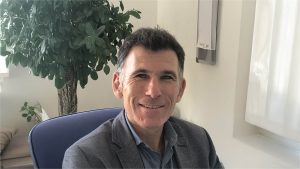
Josep Maria Haro
New technologies: risks and opportunities
Is the use of social media by young people a risk factor for mental health?
“Social media is a relatively new phenomenon and it’s likely that all of us need to learn how to use it better. Like any technological innovation, it has positive and negative aspects. The big problem is its speed and dynamism, making it more difficult for society to adapt.” – Enrique Baca
“The recommendation is that children be exposed to technology very gradually because a certain degree of neurobiological maturity is required, and it should be very limited up to the age of three, the period when the most important thing is direct human contact. Between three and six, children’s use of technology should be supervised and progressive, and this supervision should continue throughout adolescence.” – Enrique Baca
“Social media are a great opportunity to get access to young segments of the population that aren’t reached by the healthcare system. I think trying to control social media is an impossible task. We can make recommendations, guide parents in its use, but we also have to be open to using it to help detect and treat mental disorders.” – Víctor Pérez Solà
In this respect, how does the Survive project integrate the use of technology?
“It’s a project we’re absolutely thrilled about, which seeks to use mobile devices to reduce suicide attempts. The first phase included 1,800 people who’d already attempted suicide but the initial results were unsatisfactory, so we decided to radically change our approach.” – Víctor Pérez Solà
“We now use mobile phones to monitor behaviour in a non-invasive way. The patient receives occasional questions and we learn how they behave. This allows us to detect changes in behaviour which, in people at risk of suicide, can predict an attempt up to one week in advance, making it easier to intervene. With this approach, we’ve seen a reduction of up to 50% in the risk of suicide attempts.” – Enrique Baca
Mental health and the resources of the primary healthcare system
Are general practitioners prepared to adequately detect mental health problems?
“We’ve got a lot better at recognising people with mental disorders, although they’re not always easy to diagnose since a lot of patients come in with physical symptoms, such as digestive problems. To improve detection, doctors need time to assess the patient, to talk to them and offer responses that are not solely pharmacological. In other words, investment is needed in training and, above all, in ensuring that GPs have the time they need to do their job properly. Some places are starting to have psychologists at primary healthcare centres” – Josep Maria Haro
Does the healthcare system have enough resources to tackle mental health problems?
“Spain is below the European average in terms of investment in mental health. That’s an objective fact. It’s also true that COVID has radically helped to destigmatise mental health. It’s much easier now for someone to say they have a mental problem and are looking for help. That’s why an increasing number of well-known and socially relevant people are coming forward and acknowledging that they’ve experienced mental health problems. This is very important for users, the fact that people who are admired by society feel able to step up and say that they were unwell and that, thanks to the treatment they received, be it pharmacological or psychological, they’re okay now. And it’s also true that the country’s regional and state administrations are drawing up specific plans for mental health. However, it’s important to remember that mental health doesn’t depend solely on the healthcare system: factors such as economic stability, an adequate social circle and a purpose in life also play their part, and they can’t be guaranteed by doctors or psychologists.” – Víctor Pérez Solà
Is there enough coordination between the administrations and the departments involved in mental health issues?
“If we want to reduce the impact of mental health problems, we have to reduce their causes. These are often related to financial and work-related factors, to stress or a lack of social support networks. I believe that policymakers are aware that mental health must be included in all policies and that intervention programmes must be developed that go beyond health departments.” – Josep Maria Haro
The future of mental health
Are we now seeing the light at the end of the tunnel?
“I refuse to say otherwise. It’s more difficult for us than with other diseases: we don’t have biomarkers to help us diagnose disorders and there’s still quite a lot of social stigma. But I’m convinced we’re on the right track. Integrating the work carried out by GPs, psychologists and psychiatrists will enable us to reverse this situation.” – Víctor Pérez Solà
“Just as we’ve solved other problems before, we’re confident we’ll solve this one too. We’re gradually finding a way to resolve or mitigate it, a way to enable people to get on with their lives.” – Enrique Baca
“It’s important to put this into perspective: the diagnosis and treatment of cancer have changed radically over the past 60 years thanks to investment in research. I believe the same thing’s starting to happen in mental health: we need that investment to be able to change the natural history of these disorders.” – Josep Maria Haro