

Snapshot of the Month: “Olla barrejada”
Published on 26/03/2026
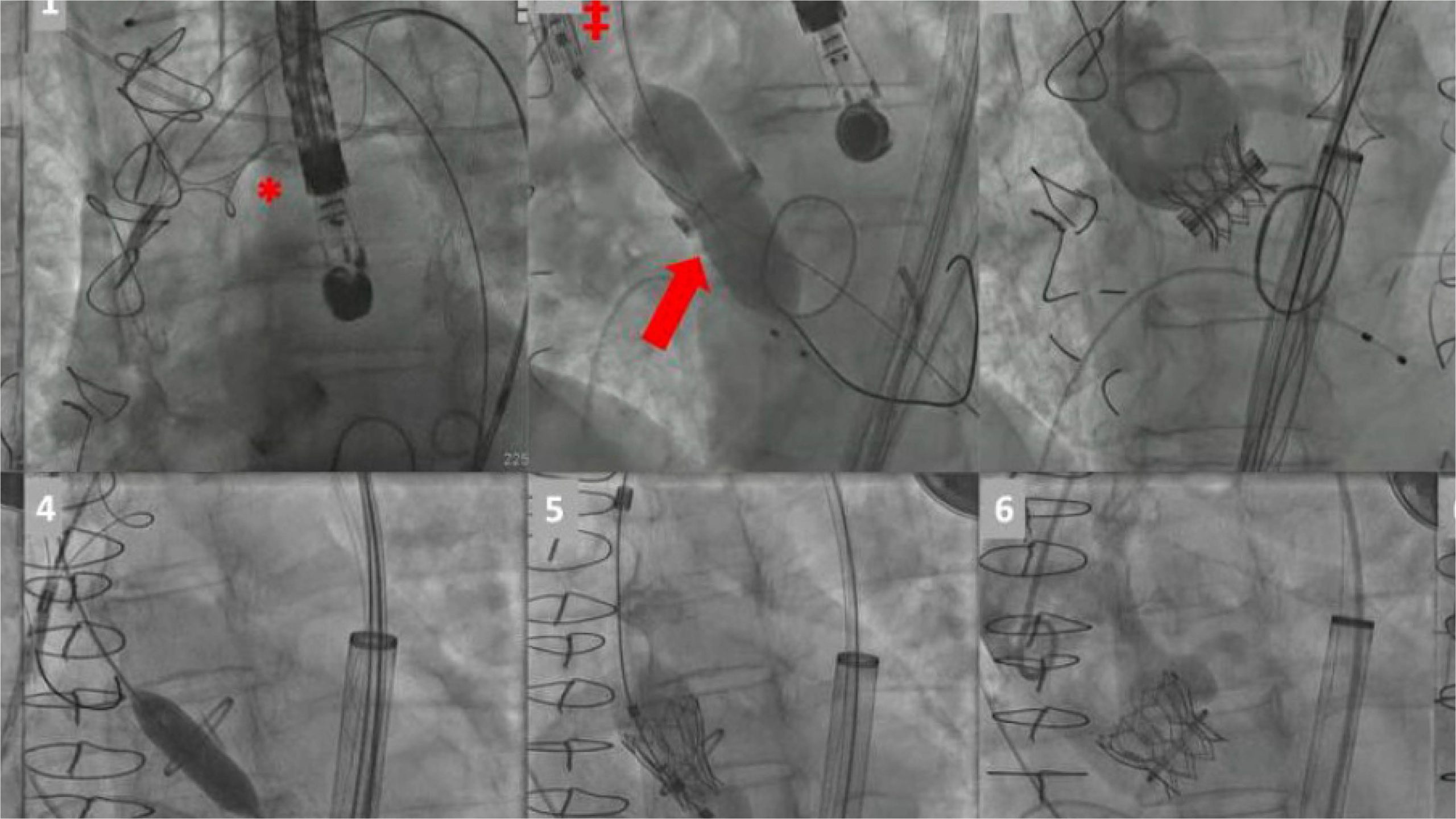
At first glance, the image looks like an improvised drawing: meandering lines, recurring loops and shapes floating in a greyish space. It could be an abstract doodle or the sketch of an impossible architectural design. However, what we’re actually seeing is the inside of a heart during a pioneering medical procedure.
This snapshot captures a key moment in research that has demonstrated, for the first time, that it’s possible to replace a previously implanted mechanical heart valve without the need for open-heart surgery. A breakthrough, published in the European Heart Journal, which could change the treatment of many elderly patients with valvular heart disease.
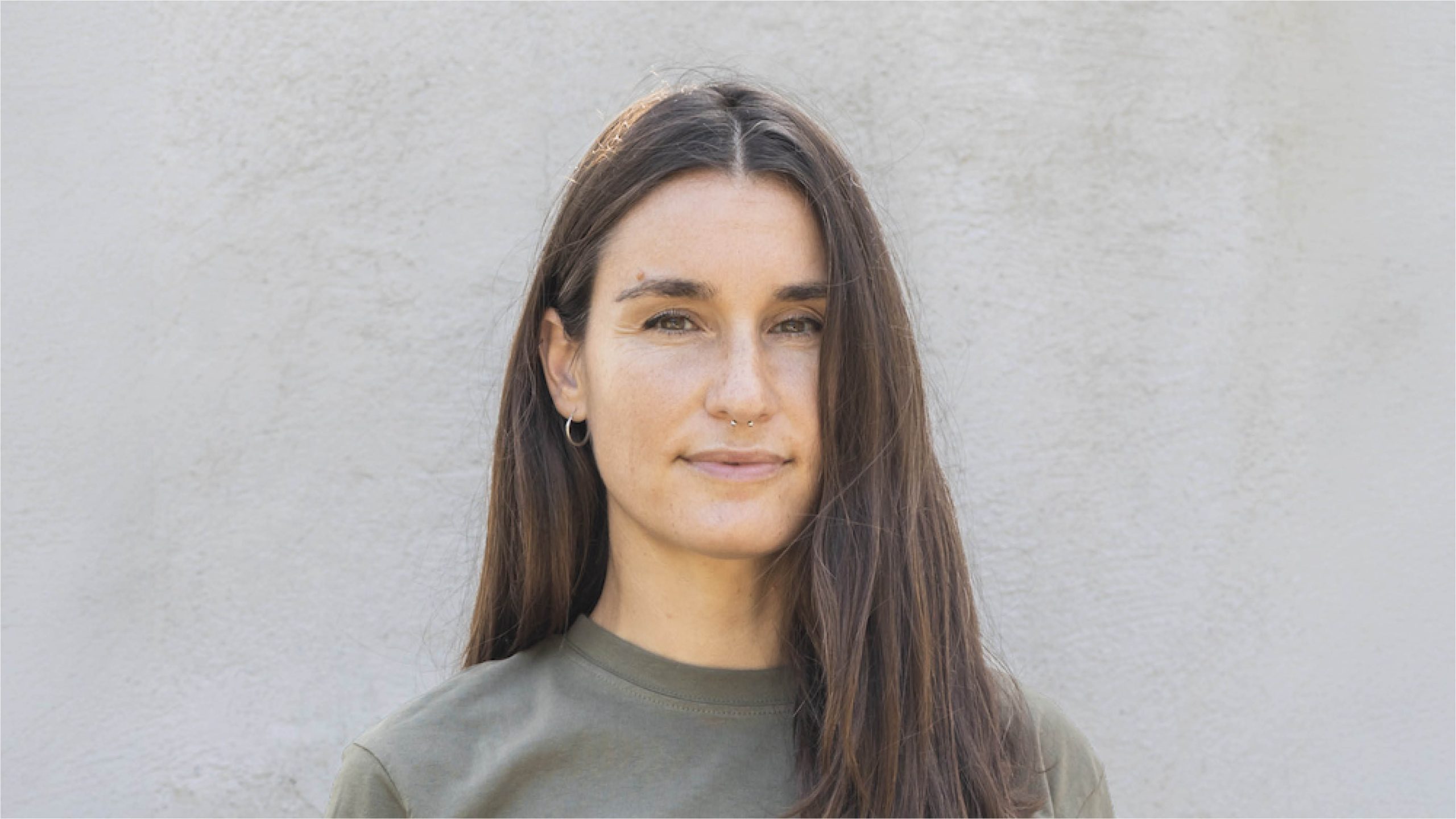
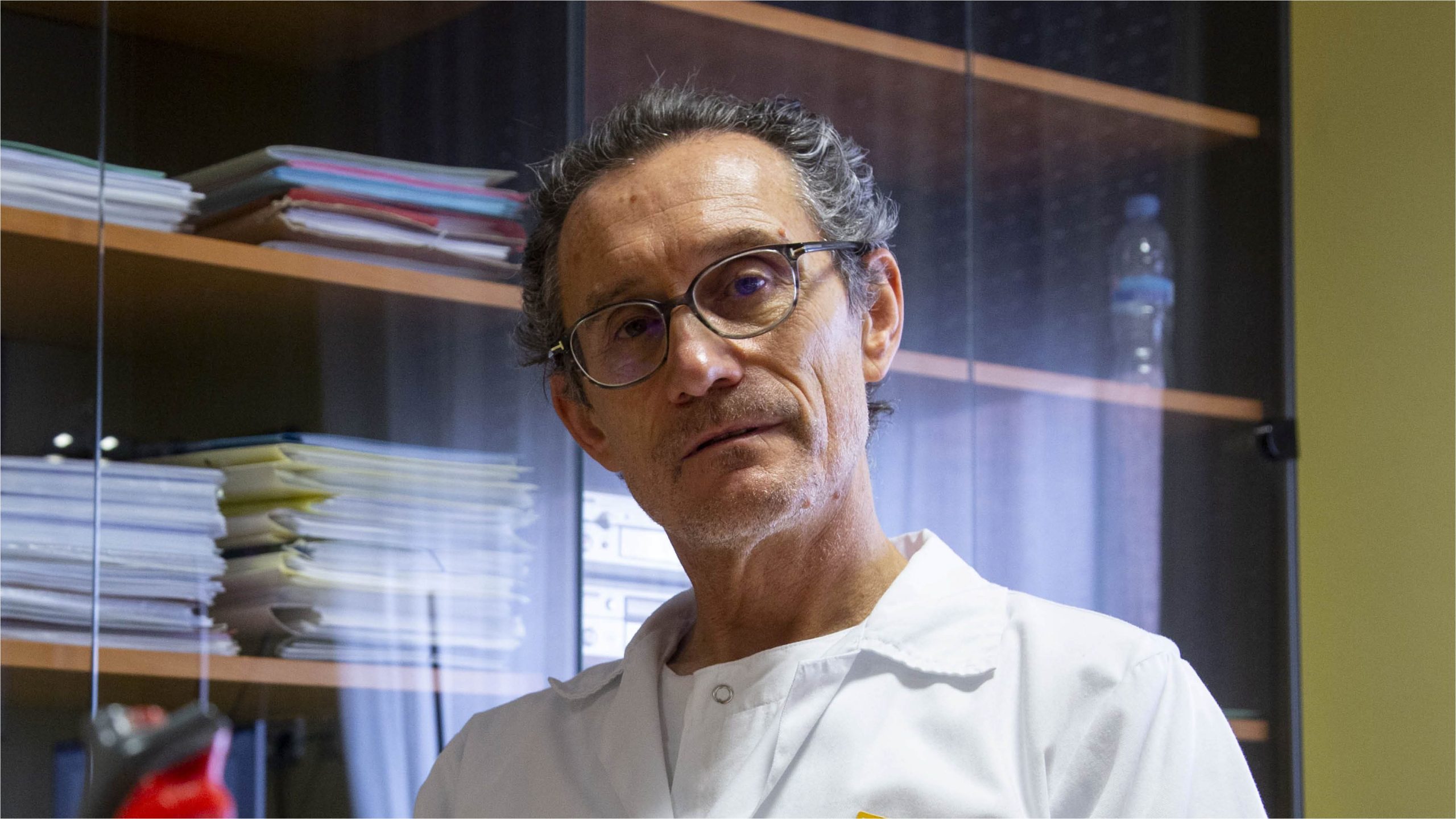
To explore this image from two complementary perspectives, the artistic and the scientific, we’re joined by Maria Rius, an architect and visual artist, and Dr. Alberto San Román (Hospital Universitario de Valladolid) and Dr. Borja Ibáñez (CNIC), the researchers responsible for the study.
We’ll start with Maria.
Maria, what works of art does this image remind you of? And what title would you give it?
M: The image reminds me of the drawings by Lina Bo Bardi, one of my favourite architects. In her work, she always integrated modern trends with insights from the popular culture of the location. She produced some beautiful line drawings and watercolours and this image could well be a snapshot of one of them.
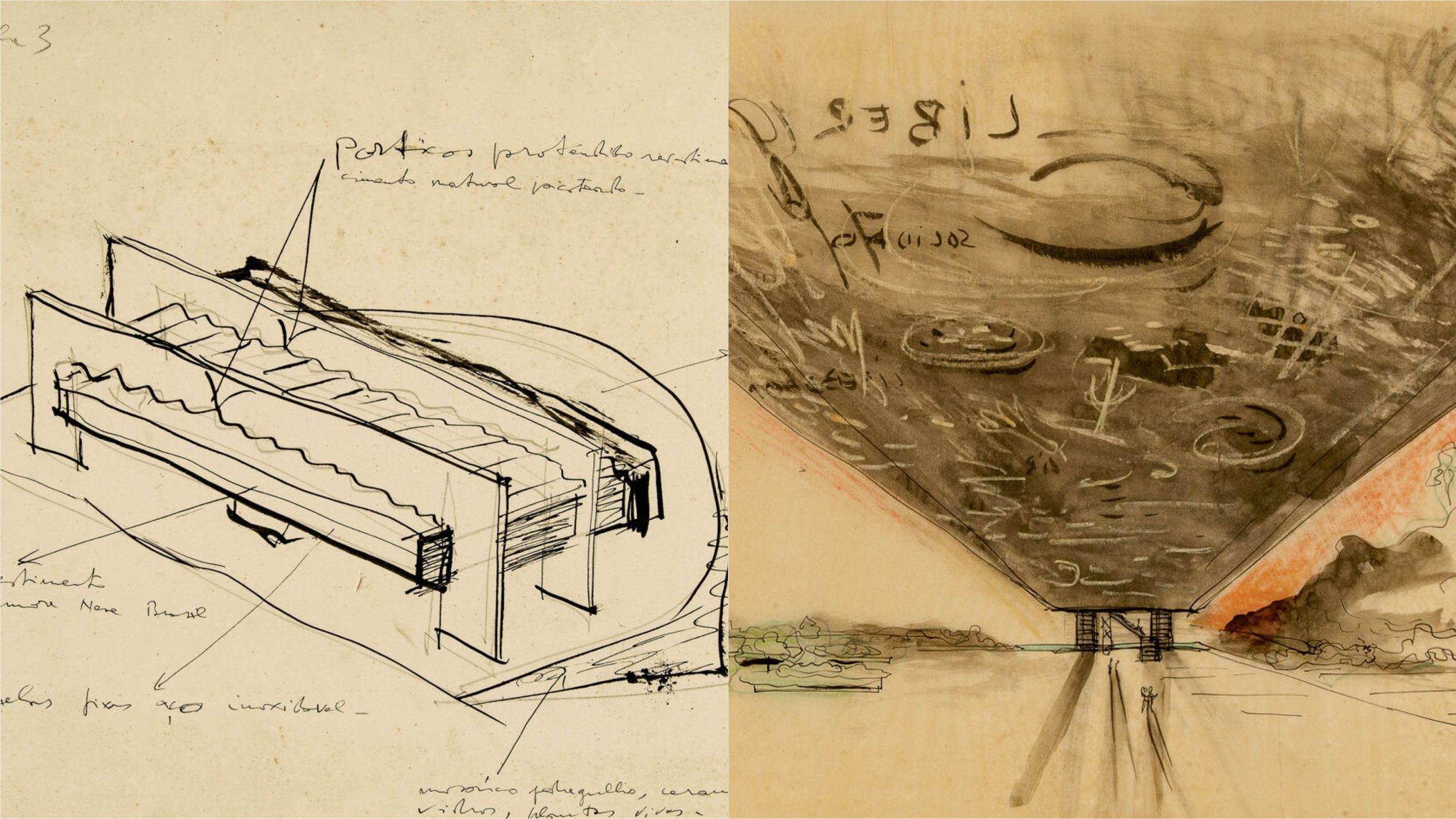
Left: Lina Bo Bardi: Perspective of the São Paulo Museum of Art with explanation of the porticos and substructure, ca. 1957–1968, graphite, coloured pencil, ink on cardboard. Photograph by Henrique Luz.Right: Lina Bo Bardi: Perspective of the São Paulo Art Museum, 1965. Ink, pastel on parchment paper. Photograph by Henrique Luz.
There’s something about the composition and the erratic lines in some parts that also reminds me of primitive painting, or certain works by Basquiat and Maria Pratts.
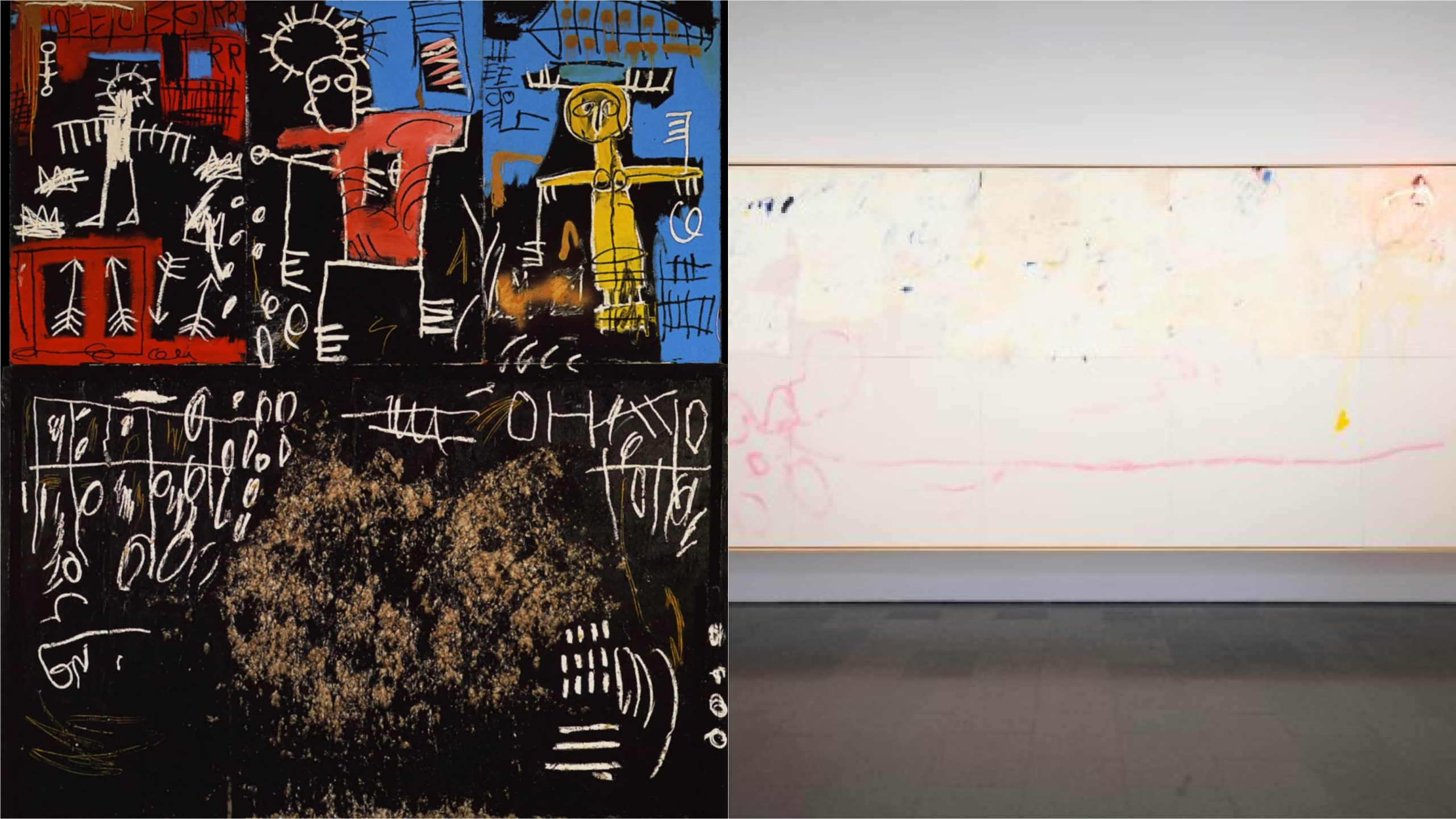
Left: Black Tar and Feathers, 1982, Jean-Michel Basquiat. Right: Sento una música dintre del cap (Transformació d’un pensament borrós) (I Hear Music Inside My Head (Transformation of a Blurry Thought)), 2021, Marria Pratts
If I had to think of a specific piece of architecture, I’d say John Hejduk’s Victims project: a memorial park comprising 67 structures that function almost like characters. Through them, he explores loss and the relationship between human beings and symbolic structures.
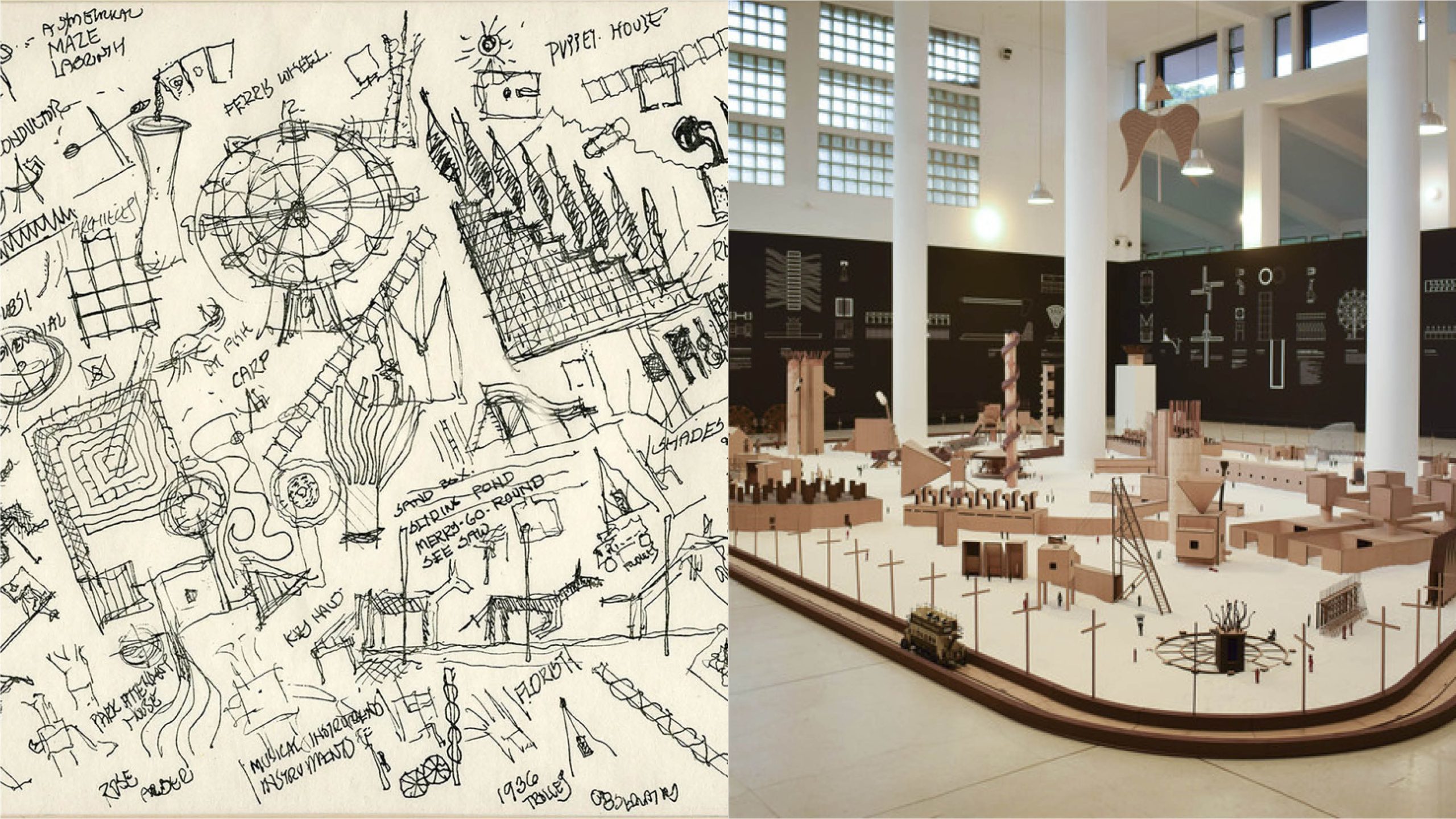
Left: John Hejduk, sketch for ‘Victims’, 1986. Right: ‘Victims’ by John Hejduk. Photograph by Laura Sepúlveda.
For this reason, I’d call it “Olla barrejada” (a Catalan stew made from any ingredients to hand)
Maria Rius
Alberto, Borja, what are we actually seeing in this image?
A and B: The image shows different stages of a new cardiac procedure that means defective mechanical heart valves can be repaired without the need for open-heart surgery. It shows the catheters and devices that are inserted into the heart via the femoral artery, located in the groin, to operate on a previously implanted aortic valve.
The study addresses an increasingly common clinical problem: there are many patients who underwent surgery years ago to have a mechanical aortic valve implanted but, over time, these prostheses can deteriorate and cease to function properly.
Why is this new procedure so important?
Traditionally, the only solution was to operate on the patient again using open-heart surgery. However, many of these patients are now very elderly and the risk posed by surgery is too high.
Our work demonstrates, for the first time, that it’s possible to repair or replace this metal valve using a completely percutaneous procedure, i.e. without the need for open-heart surgery.
How exactly does it work?
A and B: Instead of opening the chest, a catheter is inserted through the femoral artery and guided to the heart using imaging techniques.
By means of this system, the old valve can be partially detached and a new prosthesis placed inside it. This is all carried out from within the blood vessels, without the need for major surgery.
Alberto San Román
Before this procedure was applied to patients, tests were carried out on an animal that’s very similar to humans, namely pigs, in which we implanted metal valves and then replaced these successfully.
Once the procedure’s feasibility and safety had been proven, it was applied to an initial series of selected patients, with exceptional results.
We can’t end this interview without answering a key question. Maria, what do you think is the relationship between science and creativity?
M: I’ve always felt that the two disciplines share something fundamental: curiosity. Both science and art begin by observing the world, by asking questions and exploring potential answers.
Architecture of a solution
As Maria Rius suggested, the image resembles an “olla barrejada”: a “mixed pot” of intersecting lines floating in a space that’s difficult to decipher.
However, what at first glance appears to be a chaotic drawing is, in fact, an extremely precise map of the heart’s interior. The outline of a new procedure that’s capable of improving the length and quality of life of thousands of people.