

New opportunities to defeat cancer
Published on 20/05/2025

“Clinical trials aren’t only a tool for research but also represent a real possibility of treatment for patients who’ve exhausted many other options”. This is the premise with which Elena Garralda, Director of UITM-CaixaResearch at VHIO, validates each of the new therapies promoted by this research unit.
One example of this is the clinical trial for the European project PragmaTIL, led by VHIO. With the participation of 12 institutions from 6 countries, including “la Caixa” Foundation, this trial has treated the first patient with an innovative immunotherapy. Its aim? To improve the care of people with resistant tumours, reducing the treatment’s toxicity but without it losing any efficacy.
TIL stands for Tumour Infiltrating Lymphocytes and it’s an immunotherapy that attacks tumour cells using the body’s own strategy. First, some immune system cells called lymphocytes are extracted from the patient’s tumour. After these cells have been multiplied and activated to enhance their capacity, they’re reintroduced back into the patient like an “army”, to attack and destroy the tumour cells more effectively.
This new therapy is in addition to a long list of advances that endorse the UITM’s track record. Today, on International Clinical Trials Day, we look at these advances together with the unit’s Director, Elena Garralda.
Let’s talk about achievements and lessons learned
Since it was started up almost 15 years ago, the UITM-CaixaResearch at the VHIO has established itself as a European benchmark for early phase clinical trials with over 10,000 patients and more than 70 new drugs and indications approved.
“I’m proud of the fact that three of the trials we’ve led have been first-in-human [tested on humans for the first time] with drugs developed at our own labs, demonstrating VHIO’s translational approach to research: taking discoveries from the lab to patients as quickly as possible” explains Elena Garralda.
However, a 15-year track record is not only represented by numbers but also by the lessons learned. “Thanks to research, we now have a better understanding of the biology of tumours and have designed drugs aimed at specific genome alterations. As a result, we can be increasingly precise in our selection of those patients who’ll benefit most from one treatment or another. What’s known as precision oncology” she adds.
But the most important lesson is related to the clinical trials themselves. “Today we see them as real therapeutic opportunities for patients who have no other alternative to treat their tumours. As a result, how they’re designed and implemented has changed a lot” Garralda points out.
UITM-CaixaResearch has a molecular pre-screening programme that analyses the genome profile of each tumour before a clinical trial starts. Advances such as this, together with a specialised, multidisciplinary structure, have helped to reduce the times from when a drug is developed in a lab to its testing on patients, going from cycles of 8-10 years down to 2-5 years.
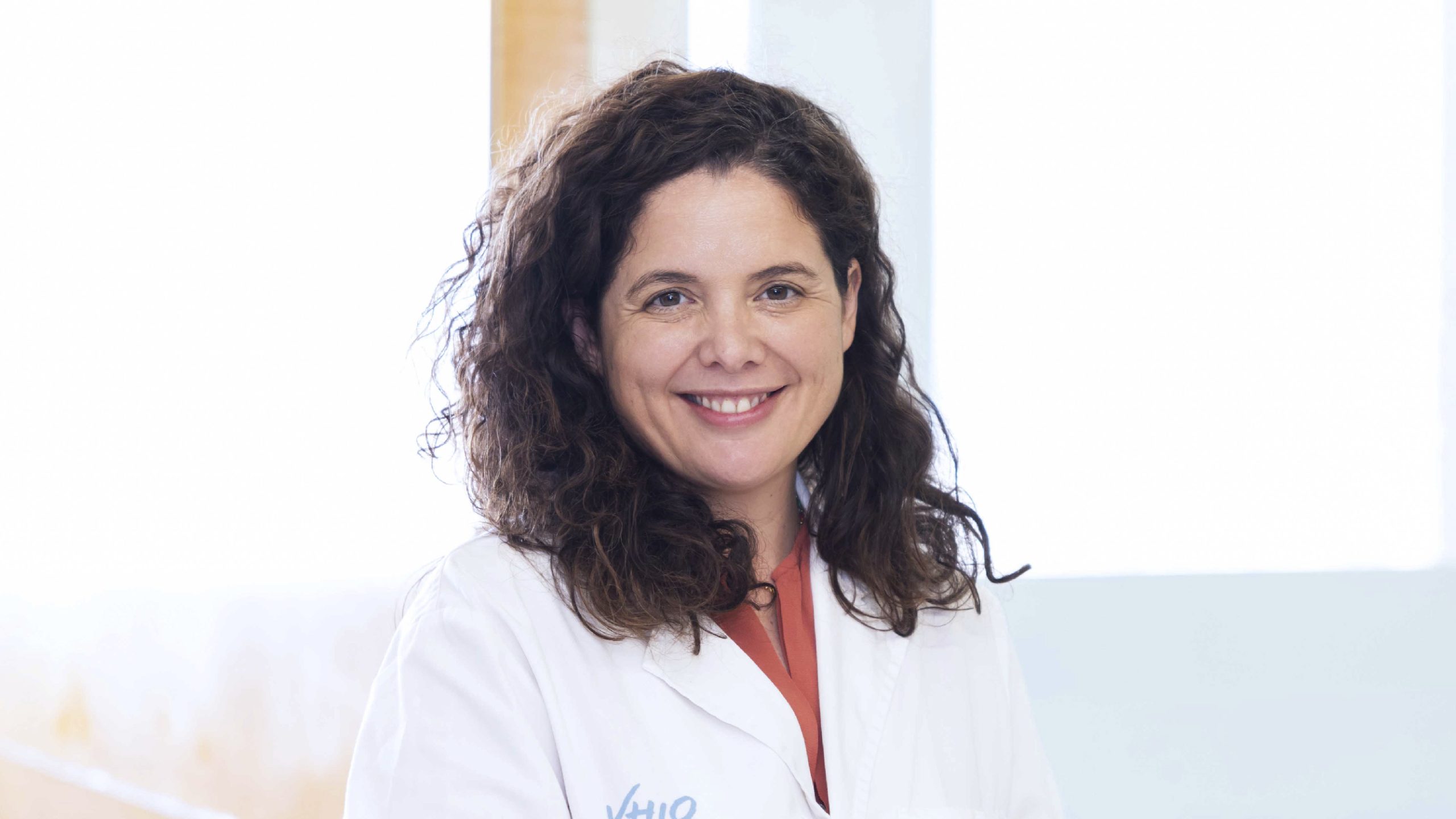
Elena Garralda, Director of UITM-CaixaResearch at VHIO.
What are the challenges in the short and medium-term?
According to the Director of UITM-CaixaResearch, we’re facing two major challenges: reducing the toxicity of therapies and understanding the heterogeneous nature of cancer. There’s no single type of tumour; in fact, cancers can have very different genetic alterations even within the same organ, making it difficult to find new therapies and biomarkers.
“We’re working on predicting who might truly benefit from each specific treatment and we’re focusing increasingly on new therapeutic strategies with more favourable toxicity profiles, such as immunotherapy” explains Garralda. “Our aim isn’t just to prolong patients’ lives but also to preserve their physical and emotional well-being as much as possible throughout the process”.
Technology will play a vital role in this path towards personalised medicine. Artificial intelligence and data-based medicine are likely to transform how clinical trials are designed and monitored, making them more agile, accessible and representative.
We hope to be able to write about these advances very soon.