

Mitochondrial diseases with Albert Quintana
Published on 28/02/2026

By definition, a rare disease affects fewer than 1 in 2,000 people.
That’s why they’re called ‘rare’. However, when we consider that there are 7,000 different types of rare disease affecting 300 million people (a number close to the population of the United States), perhaps they’re not so rare after all.
With these figures in mind, in 2025 the 194 member states of the World Health Organization (WHO) unanimously approved a historic resolution: a document that recognises these diseases as a global health priority and establishes a 10-year action plan. The goal? To incorporate them into national agendas, increase investment in research and promote the sharing of data between countries.
Within the broad group of pathologies covered by this resolution, some are particularly complex and devastating: namely mitochondrial diseases, caused by alterations in the mitochondria, the cell organelles responsible for producing the energy our cells need to function.
Today, on Rare Disease Day, we’re focusing on these diseases by means of a We ask an expert article with Albert Quintana, a researcher at the Autonomous University of Barcelona (UAB) and an expert on the role played by mitochondria in these diseases.
Let’s begin:
What are mitochondria and why are they known as the “powerhouse of the cell”?
Albert Quintana sums it up as follows: “Mitochondria are key components not only for energy but also for the overall functioning of the cell. They’re very special organelles: they have their own mitochondrial DNA which, although limited, contains essential information for the cell to work properly. This is due to their curious origin: they come from a protobacterium that, about two billion years ago, allied itself with the precursor of today’s cells”.
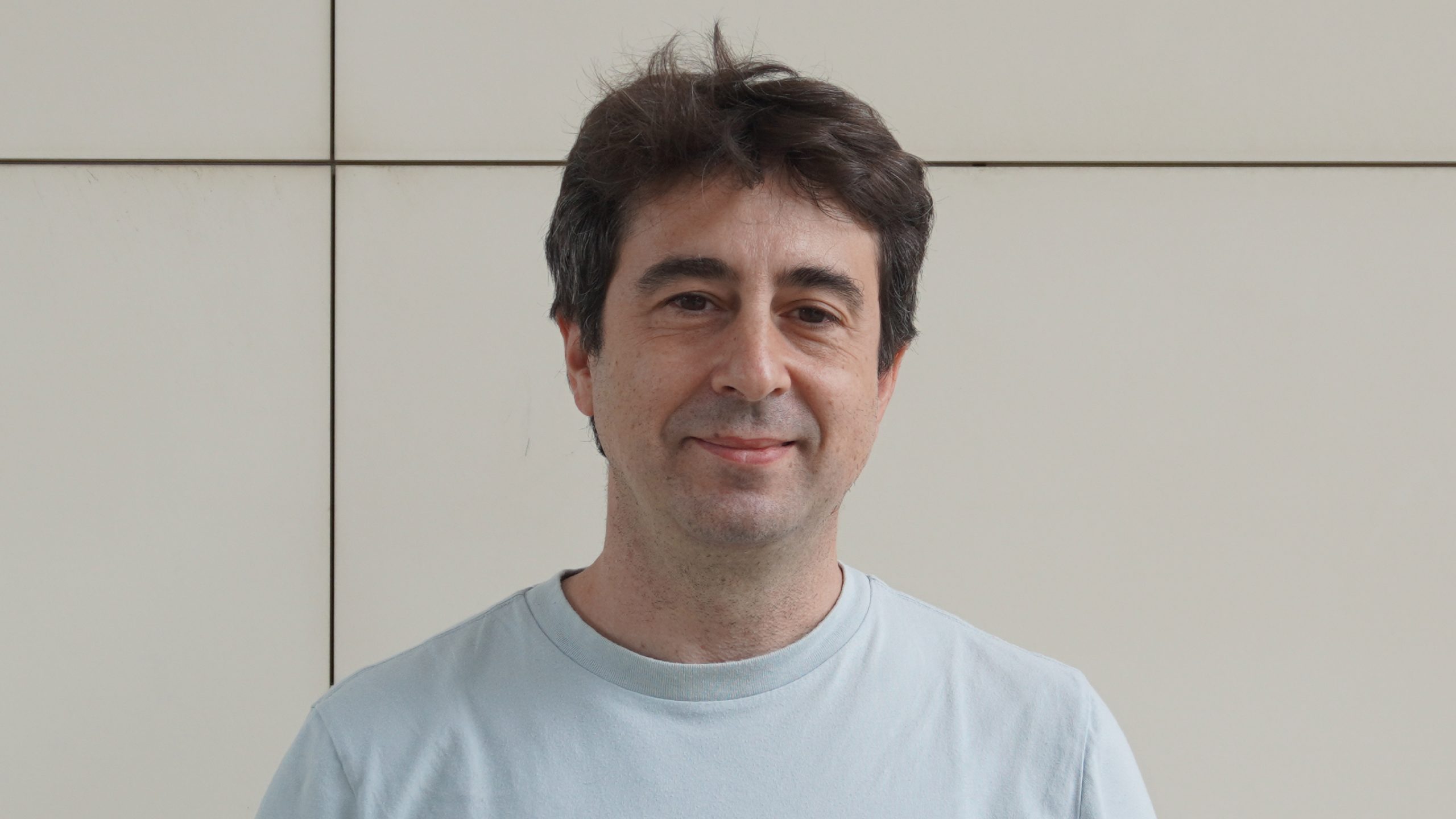
Albert Quintana
This alliance, explains Quintana, has been beneficial for both the mitochondria and the cells. Mitochondria convert the nutrients we ingest into energy, generating more than 80% of the cell’s energy, while the cell produces 99% of the proteins needed by the mitochondria. As Quintana points out, “this evolutionary cooperation enabled the development and complexity of today’s organisms”.
What other functions do mitochondria serve that make them indispensable to our cells?
“Although energy production is their best-known function, mitochondria also act as control centres for how the cells function” Quintana replies. “They contain information about the state of the cell and regulate its metabolism, and there’s growing evidence that they’re essential for our immune response“.
“The combination of all these features makes mitochondria fundamental in determining cell survival or death“.
And what happens when mitochondria ‘fail’?
“To use a recent analogy, what happens in mitochondrial diseases is similar to what we experienced in Spain on 30 April 2025: a blackout, a failure that prevents the necessary energy from being produced” explains Quintana.
When mitochondria stop working properly, the cell’s main source of energy disappears. “The tissues that consume the most energy, such as the nervous system and muscles, are the most severely affected” continues Quintana. “Some cells can resort to alternative mechanisms to produce energy, such as ’emergency generators’, but not all cells have these generators and, even when they do, they’re neither as efficient nor as sustainable as mitochondrial energy” he explains.
“Consequently, severe mitochondrial dysfunction can lead to a number of neuromuscular pathologies known as mitochondrial diseases“.
How are these diseases defined? And what is their origin?
“They’re a group of diseases with a common feature: the inability of mitochondria to produce energy efficiently” says Quintana.
“They affect approximately 1 in every 5,000 births and their origin lies in genetic mutations that can be found in both nuclear DNA and mitochondrial DNA”. These are complex diseases with a wide variety of symptoms, as the severity and tissue affected can vary depending on the location: “If the mutation is in the nuclear DNA, inheritance is usually classic: two mutated copies are required and all cells are affected. Symptoms therefore appear early on”.
In contrast, mutations in mitochondrial DNA are inherited exclusively through the maternal line. The egg may contain a mixture of healthy and mutated mitochondria, which are distributed randomly in each cell during development. “This means the disease varies depending on the proportion of mutated mitochondria in each tissue, a phenomenon known as heteroplasmy. The higher the proportion of mutated copies, the earlier and more severe the onset of symptoms” he continues, “although the impact may vary depending on which organs receive a greater load of mutations during development”.
At the moment, there’s no cure for these cases but we’re already beginning to see the first headlines claiming to have found one. What treatments are being researched? What is the future of such promises?
“Given the strong genetic component, therapeutic strategies are focusing on two main avenues” explains Quintana. “Firstly, replacing the mutated gene through gene or cell therapy; and secondly, compensating for the effects of the dysfunction of the affected proteins“.
Of these two avenues, “gene therapy could be a definitive solution in the future but it still faces major technical challenges” warns Quintana, “such as getting the corrected gene to express itself in all the affected cells or reversing the damage once the disease has already begun”.
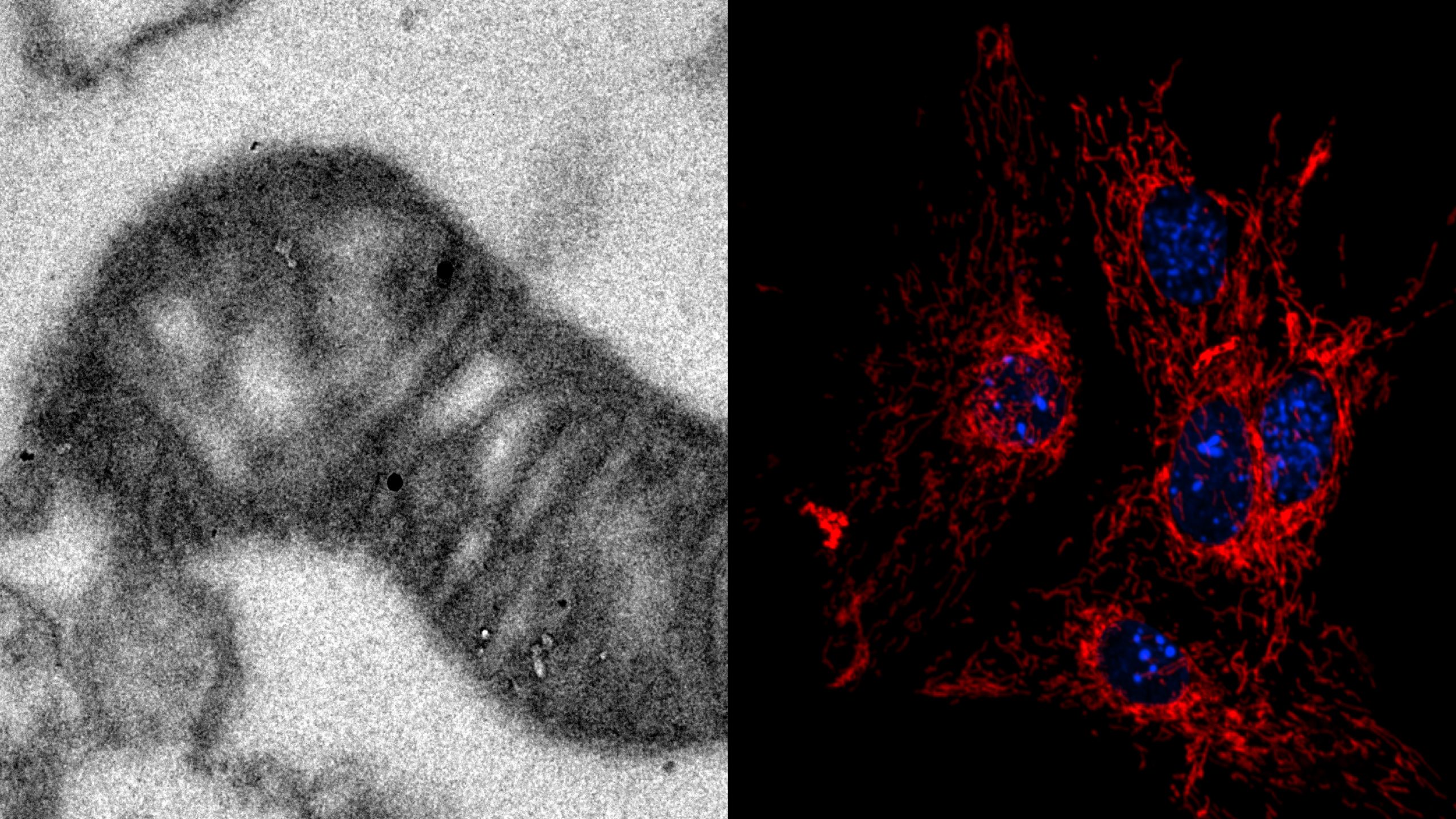
Left: Electron microscopy of a mitochondrion. Credit: Laura Cutando, UAB. Right: Nucleus (blue) and mitochondrial network (red). Credit: Marta Luna, UAB.
At the same time, the search for drugs capable of halting or slowing the progression of the disease is a particularly active field. “There have been promising results at a preclinical level but now it’s time to evaluate them in clinical trials and see whether they work in different types of mitochondrial disease or only in very specific cases”. Given the great diversity of mutations and clinical manifestations, this will be a key factor regarding the impact of such therapies.
Focusing on your research, how did you come to study these diseases? What are you currently researching?
“During my postdoctoral studies in Seattle, I worked with an animal model of Leigh syndrome, the most common paediatric mitochondrial disease, which causes severe neurological impairment” recalls Quintana. “There, I came into contact with associations and families of patients, which made me realise the importance of such research for society. Since then, interacting with them has been a priority in my work”.
“Afterwards I began my current line of research, which arose from a question: Why, when faced with the same mitochondrial mutation, do some neurons die but others survive?” Understanding the mechanisms that activate some cells and protect others could guide future treatments. “Treatments that enable us to prevent the death of these neurons and, consequently, the neurological symptoms”.
To conclude, what message would you like to pass on to society about these diseases?
“I’d like to stress that classifying them as rare, raising awareness of them and promoting research into them is particularly important, not only to cure mitochondrial diseases but also to understand the basic processes involved in how our cells work, with implications for a wide range of pathologies” says Quintana.
“But, above all, I’d like to make it clear that, although these diseases are rare at an individual level, there’s a large number of research groups, both in basic and clinical science, attempting to find a cure. Families should know that their strength, their drive and their tireless motivation are what encourage us to continue on this path, however complicated it may seem“.