

Snapshot of the month: «Lunar fossil»
Published on 18/09/2026
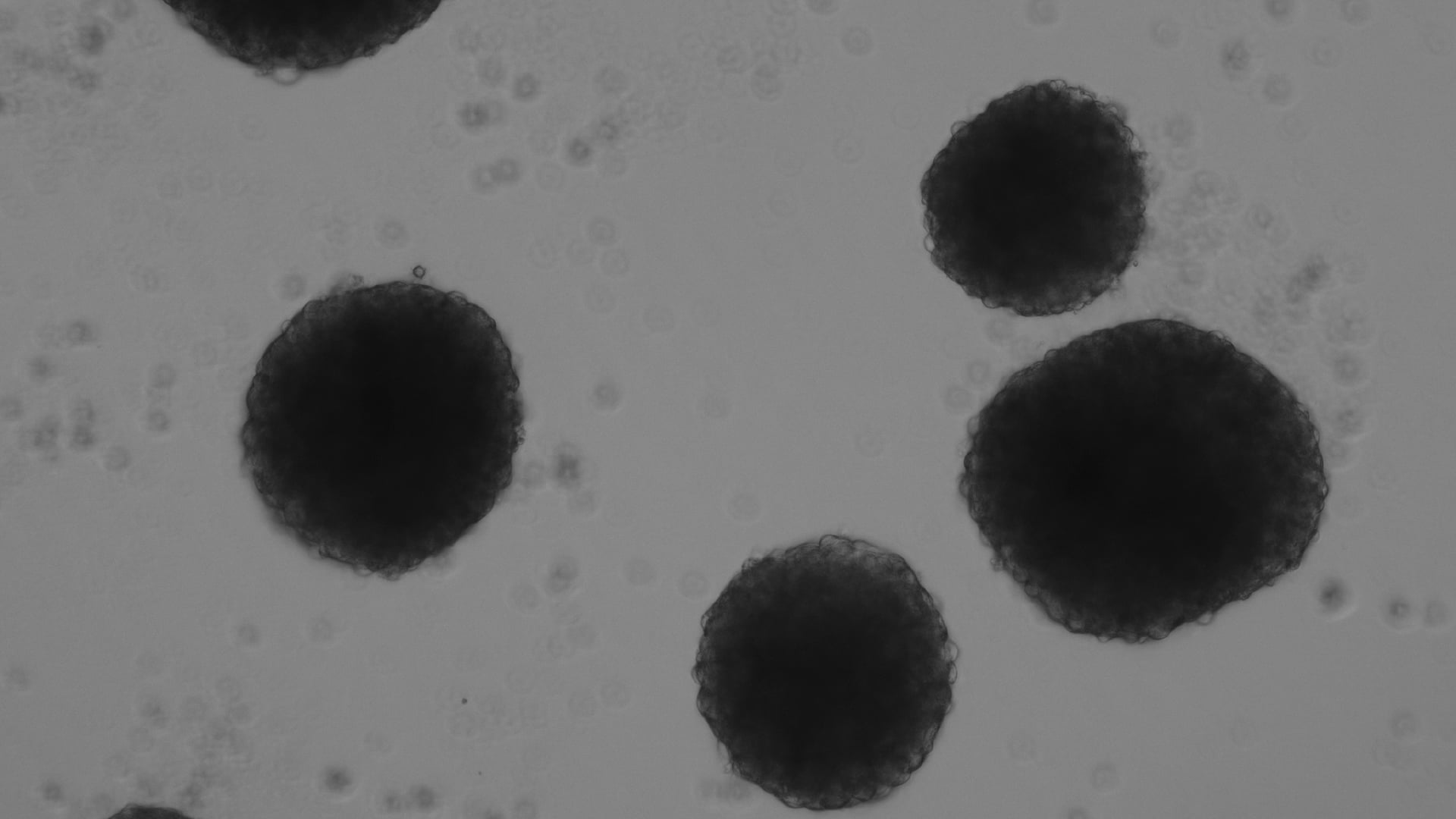
In this month’s instalment, science and artistic creation embark on the same journey from shadow to light.
This month’s Snapshot emerges from deep shadow, evoking Odilon Redon’s iconic noir drawings (black-and-white works characterised by dense, diffuse, dreamlike and unsettling forms), prior to his subsequent transition towards colour and light. Similarly, the image from this scientific study first dwells in the shadow of tumour spheres to, through the impact of blue light, activate a photosensitiser drug that goes on to act on these resistant cells and unfold the true ‘scientific work’.
We’ve adopted two approaches to examine this intersection of perspectives between art and science in this innovative photopharmacological study. On the one hand is the artistic vision of Cristina Gómez Barrio, who undertook her postgraduate studies in Berlin thanks to a fellowship from “la Caixa” Foundation. She’s an independent artist, a lecturer at the Stuttgart State Academy of Fine Arts (ABK Stuttgart) and co-founder of the Discoteca Flaming Star collective in Berlin where, since 1998, she’s been working with an approach she calls ‘collective constellations’, in a “constant dialogue with other artists”. On the other hand, the scientific perspective is provided by the lead authors of the published study: Laia Josa Culleré, who undertook her postgraduate studies at the University of Cambridge thanks to a fellowship from ”la Caixa” Foundation and is currently a researcher at the Institute of Advanced Chemistry of Catalonia (IQAC-CSIC), where she heads the Drug Discovery and Medicinal Chemistry (DDMC) group; and Amadeu Llebaria, a researcher from our network and also a researcher at the IQAC, where he heads the Medicinal Chemistry and Synthesis (MCS) group.
Let’s start with the artist.
Cristina Gómez Barrio / Photographer: Wolfgang Mayer
Cristina, which work or artist does this image remind you of?
Cristina (C): It could be a fragment from one of Odilon Redon’s lithographs or charcoal drawings. Up to the end of the 19th century, Redon produced several portfolios of lithographs and the strength, density and texture of the blacks – this image has inevitably led me to think of them. It’s striking how Redon was able to analyse and express through the texture of the powder, how he achieves something so volatile that’s on the verge of losing its form yet so dense and profound at the same time. The images seem to emerge from the darkness of night and dreams.
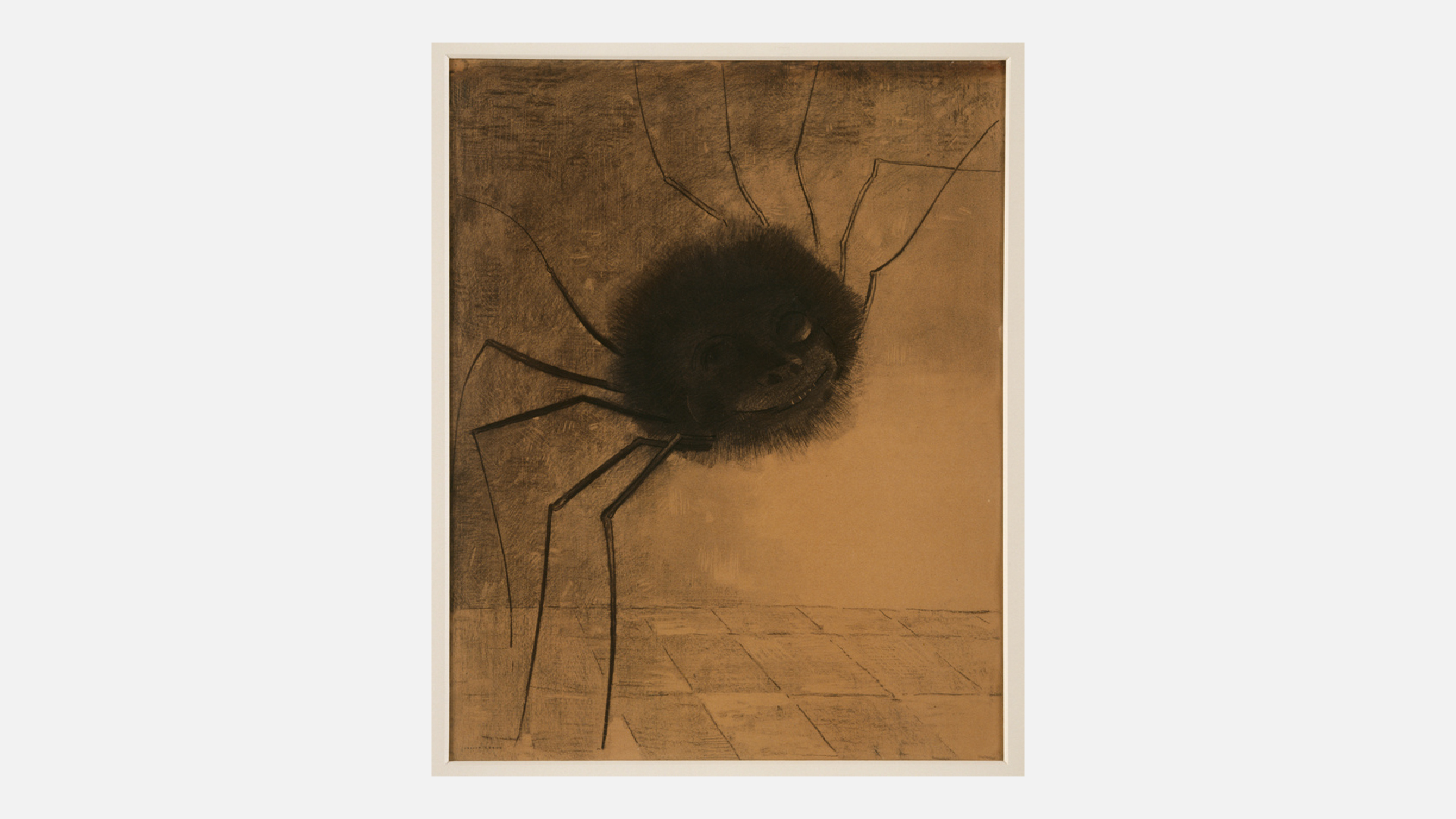
L’Araignée souriante (The Smiling Spider), by Odilon Redon (1881) / Source: Musée d’Orsay
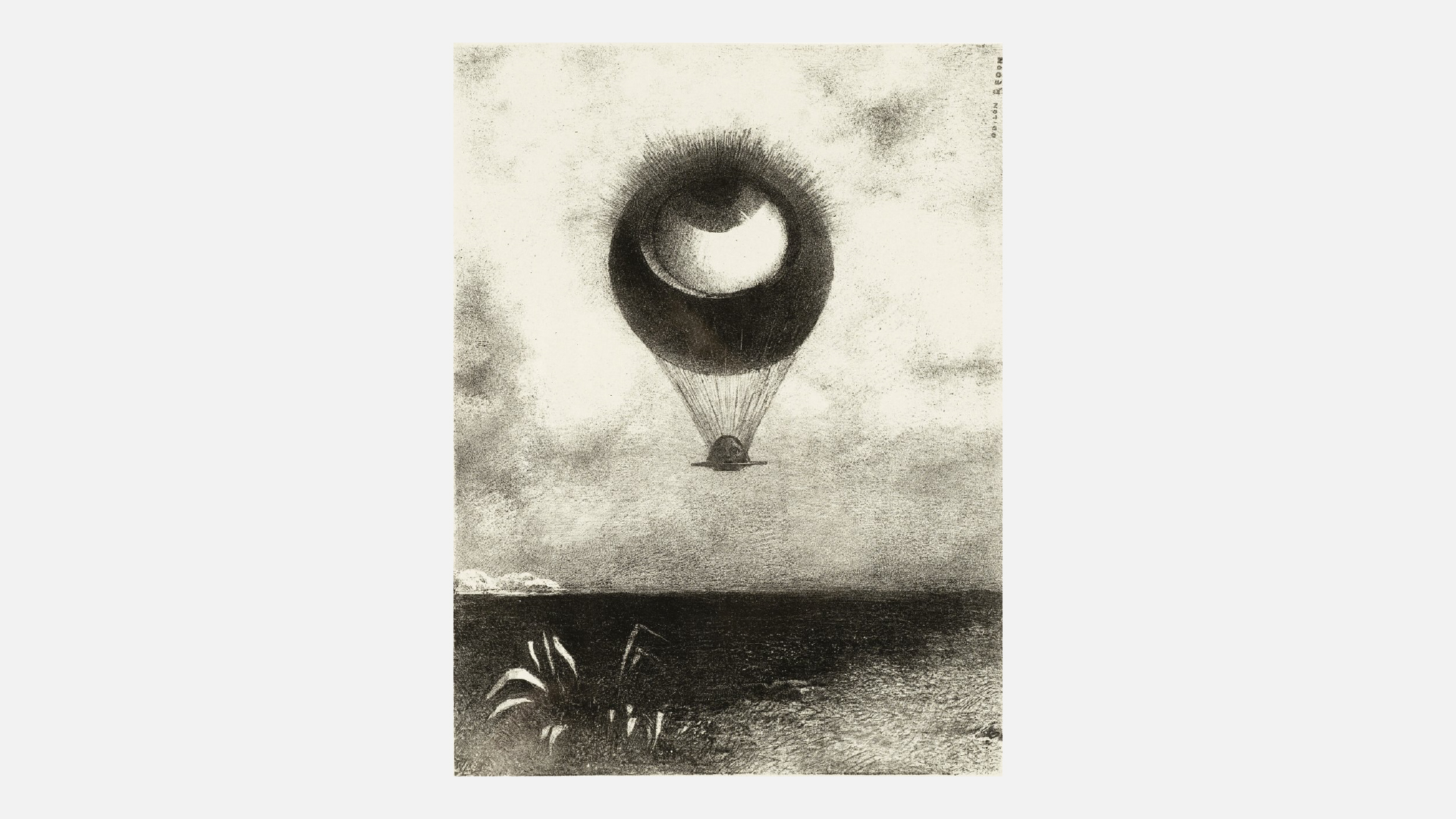
L’Œil, comme un ballon bizarre se dirige vers l’infini (The Eye, Like a Strange Balloon, Mounts towards Infinity), from the series “For Edgar Poe” by Odilon Redon (1882) / Source: Meisterdrucke Fine Art Prints
What does this image bring to mind for you?
C: I see something that’s there but which we can’t see. Like the dark light radiated by something that existed a long time ago and continues to emit energy. Or like a mark on the skin, from something that no longer exists.
I’d call it ‘Lunar Fossil’ if I had to give it a name.
Let’s continue with the researchers.
Laia, from a scientific perspective, what do these clusters represent?
Laia (L): In the image we see three-dimensional clusters, known as spheres, of cancer cells. Tumour stem cells, which are particularly resistant to treatment, proliferate under such conditions, allowing us to study whether our molecules are capable of eliminating them.
Amadeu, what kind of molecules have you developed?
Amadeu (A): We’ve developed molecules that inhibit a cellular process called autophagy, but with a very special characteristic: they’re only activated when exposed to blue light. In the absence of light, the molecules remain inactive while, after a few seconds of exposure to light, they take on their anti-tumour activity. This enables us to very precisely control when and where they act, limiting their effect to the desired location.
Furthermore, we’ve demonstrated that these molecules can eliminate the resistant tumour stem cells, and they can be activated by blue light directly within a tumour in mouse models. Although blue light is considered to have poor tissue penetration, we’ve confirmed that it’s enough to activate these molecules in such tumour environments.
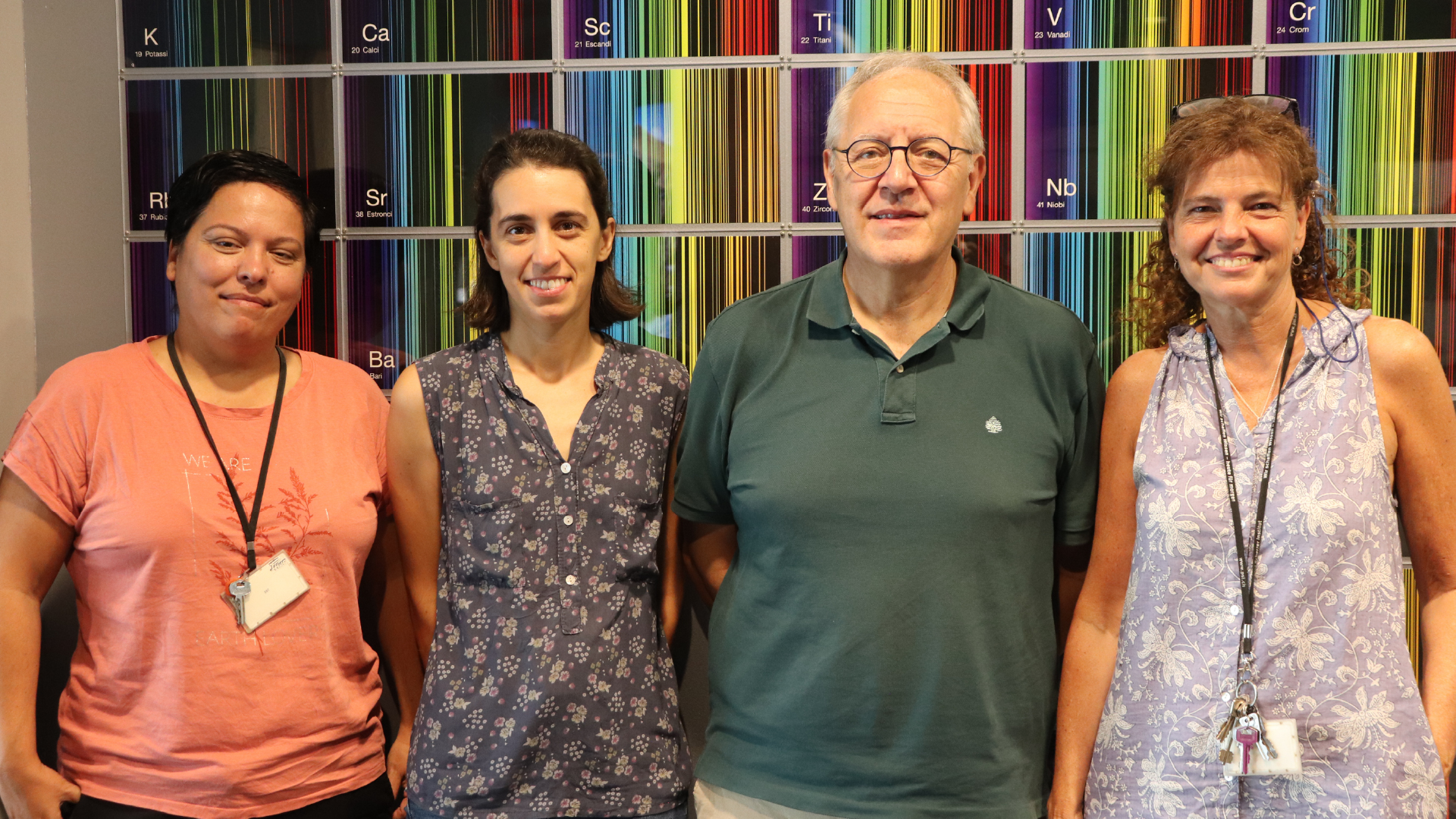
From left to right: Lourdes Muñoz, Laia Josa, Amadeu Llebaria and Carme Serra.
What problem does your discovery tackle, and how have you resolved it?
L: In many cases, tumour stem cells are responsible for relapses in cancer because they resist conventional treatments and can regenerate the tumour. However, it’s very difficult to develop drugs that selectively eliminate them because they have a lot of characteristics in common with healthy stem cells. We already know that blocking autophagy can eliminate these resistant cells but the currently available inhibitors also affect healthy tissue and can cause side effects. Our strategy involves using light to activate the drug solely within the tumour, so that its action is localised and can increase the treatment’s efficacy whilst reducing toxicity.
What impact do you think this discovery will have on society?
L: Our findings propose a new strategy for eliminating the most resistant tumour cells. In the future, this type of treatment could be combined with conventional chemotherapy to increase the chances of completely eliminating the tumour and reducing the risk of relapse. However, it’s important to emphasise that the research is still at a very early stage and these molecules still need to be optimised and their efficacy and safety studied before they can be put into clinical practice.
A: Furthermore, this work demonstrates the huge potential of photopharmacology to precisely control the action of drugs. In the future, this approach could lead to safer, more selective and more effective treatments for patients with various diseases, and cancer in particular.
We’re currently applying the same approach to the development of light-activated drugs aimed at other therapeutic targets in cancer. We’re also designing new molecules that can be activated by green and red light, whose greater ability to penetrate tissue would make them easier to use in the case of deeper tumours.
As usual, we’d like to explore how science and art, or creativity, intertwine, based on the artistic perspectives within our community. Cristina, what do you think is the connection between the two?
C: I believe that both science and art seek to understand where we are, what surrounds us, how we connect with all forms of life and existence in our environment… what has brought us to this point. And both draw on imagination whilst maintaining a high degree of rigour. But perhaps we should distinguish between creativity and art, because not all forms of creativity result in art. Just as, in scientific research, not everything is applied science.
Beyond the visual fascination aroused by these spheres of cells, what this study entails is a fundamental breakthrough in the control and specific nature of cancer therapies. The team’s work demonstrates that photopharmacology not only enables the most resistant tumour cells to be targeted by blocking autophagy, but also provides the key to doing so only when and where it’s needed, through the precise use of light.
A finding that paves the way for more effective and less toxic treatments in the precision medicine of the future.