

Snapshot of the Month: “Becoming”
Published on 23/07/2026
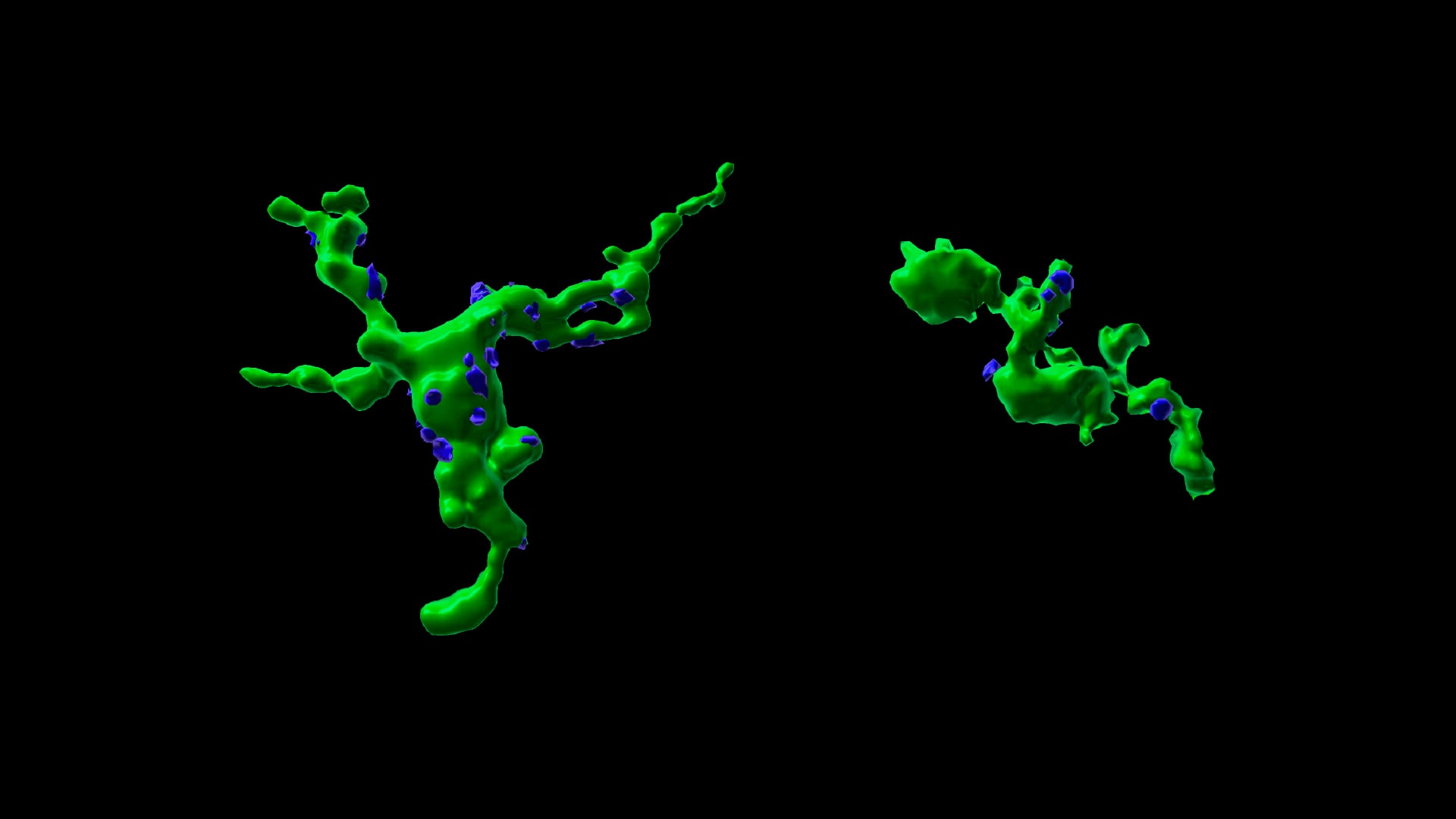
The fluid and abstract forms in nature have the power to inspire both scientific breakthroughs and avant-garde art. This month’s Snapshot straddles precisely that boundary; an image depicting a key discovery in the regulation of human fertility, yet one which, to the artistic eye, evokes the organic growth of Jean Arp’s sculptures.
To analyse this snapshot, which forms part of a study published in the journal Science, we draw on a combination of artistic and scientific perspectives. The scientific focus is provided by Eva González Suárez, the study’s director, researcher and Leader of the Transformation and Metastasis Group at the Spanish National Cancer Research Centre (CNIO), and Alejandro Collado, a researcher from the same group and the study’s lead author. The artistic perspective is provided by Eva Camba Perez, Associate Art Director at Electric Square, where she’s involved in the development of AAA video games, and who, in 2019, completed a Master’s degree in Interactive Entertainment at the University of Central Florida thanks to a postgraduate fellowship abroad from ”la Caixa” Foundation.
Let’s begin with the artist.

Eva Camba Pérez
Eva, which work of art or artistic movement does this image remind you of?
Eva Camba (E.C.): It reminds me of Dadaism, particularly the organic, biomorphic sculptures of Jean Arp, such as “Growth” and “Bust of Gnome”. The soft, abstract forms are reminiscent of the growth or transformation of a living organism. Arp created forms inspired by nature (leaves, seeds and cells) but without representing them literally. This image conveys precisely that same ambiguity between biological forms and abstract art.
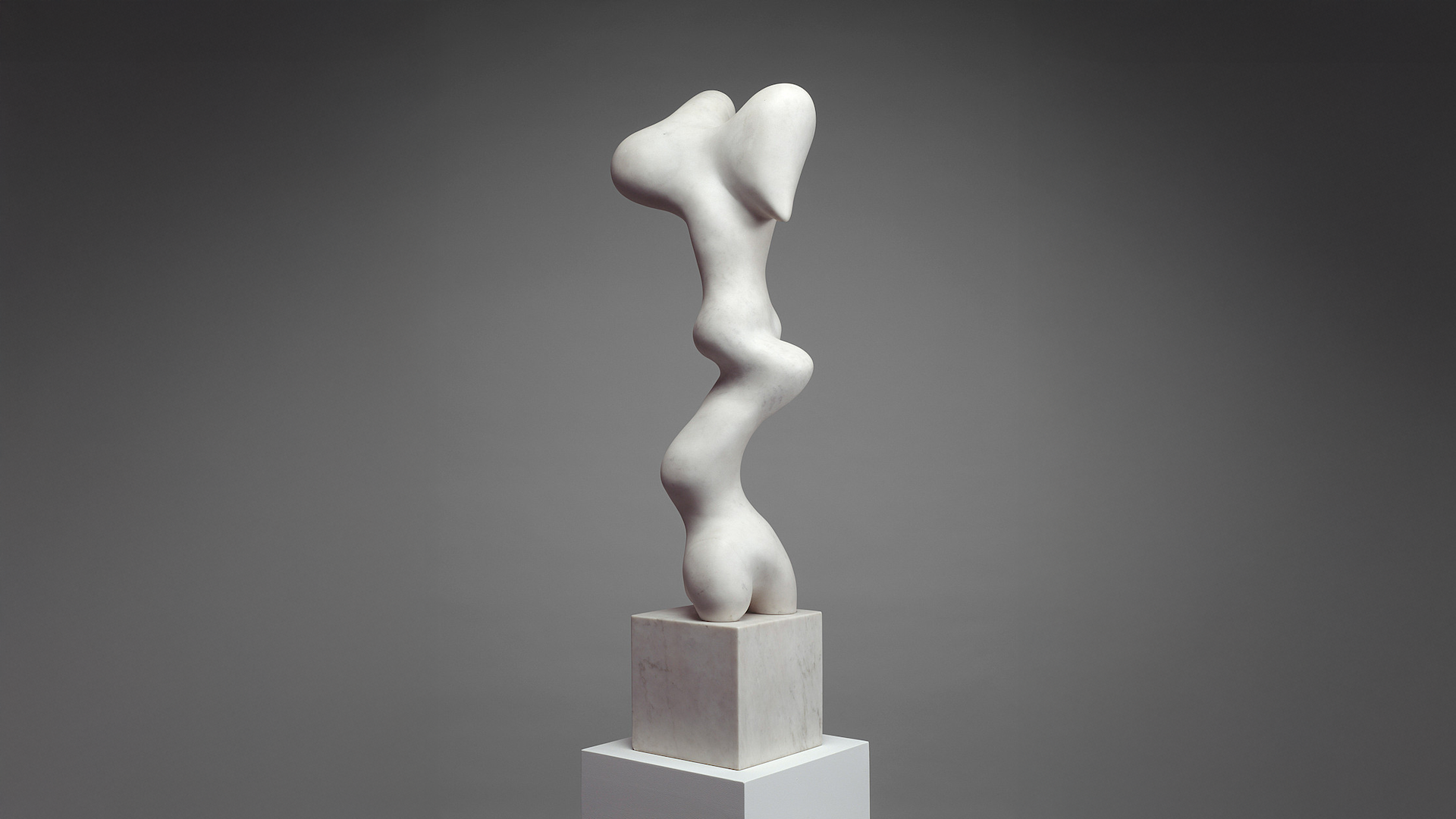
“Growth”, sculpture by Jean Arp (1938) / Source: Guggenheim
Furthermore, the composition and deep colours against a plain background remind me of the Surrealist paintings of Joan Miró, another key figure of the avant-garde who was also inspired by the fluid forms of nature.
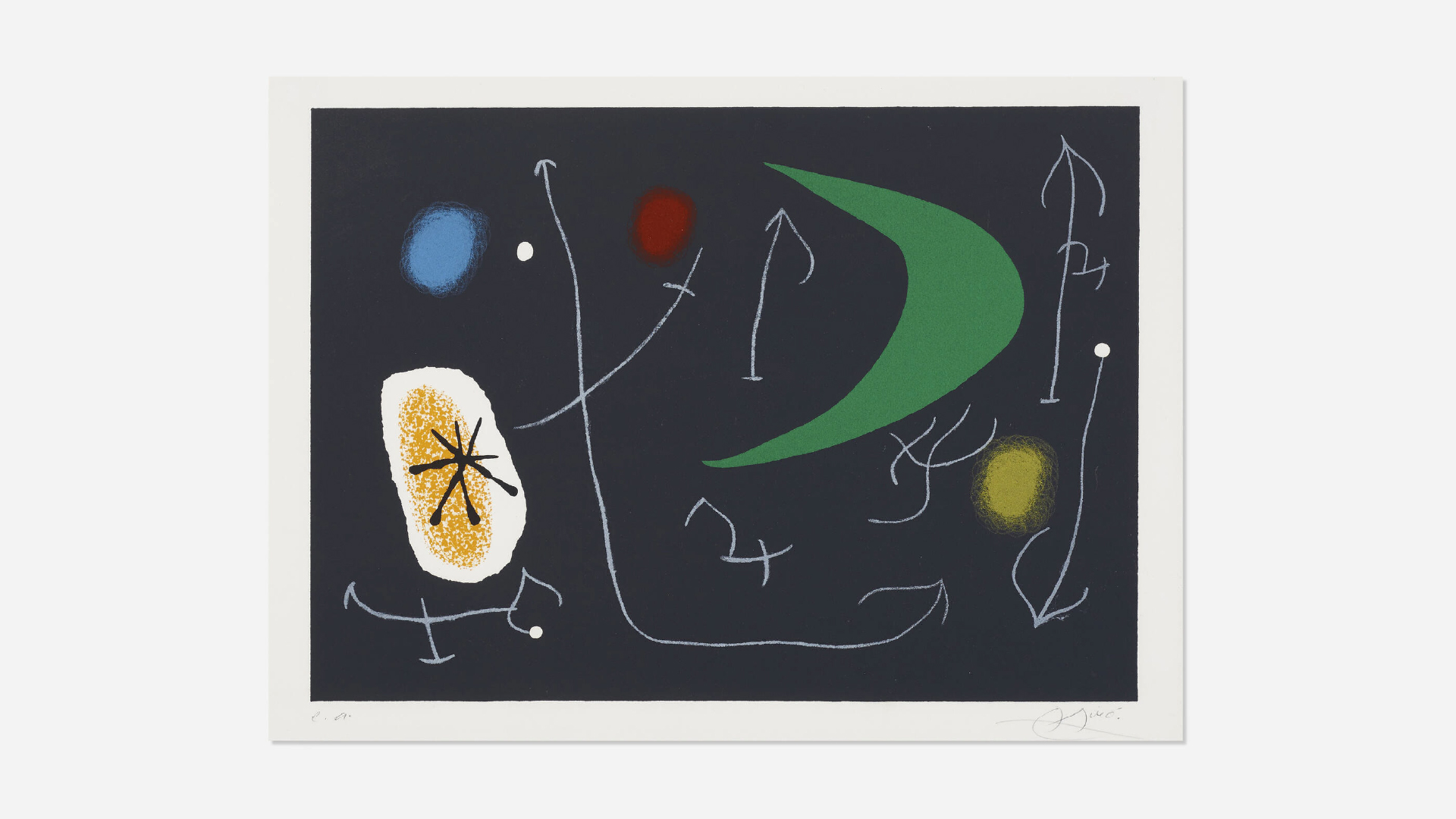
Lithograph by Joan Miró, from the book Le Lézard aux plumes d’or (1967), published by Mourlot Editions and edited by Louis Broder / Source: Wright, Auctions of Art and Design
What does this image convey to you?
E.C.: It evokes evolution and nature in motion; a constant transformation that I would call “Becoming”.
Now we’ll turn to the researchers.
Eva, from a scientific viewpoint, what does the green shape represent?
Eva González (E.G.): The image (Credits: Nozha Borjini and Rafael Fernández Chacón from the Molecular Physiology of the Synapse group at the Institute of Biomedicine of Seville (IBiS, HUVR/CSIC/US) and CIBERNED) shows microglia cells in green and, in blue, their points of interaction with neurons that release gonadotropins (GnRH), hormones that control reproduction and puberty. The image on the left shows mice from the control group, while the one of the right shows mice lacking the RANK protein. Without it, the microglia cells are smaller, have fewer branches and interact less with the GnRH neurones.
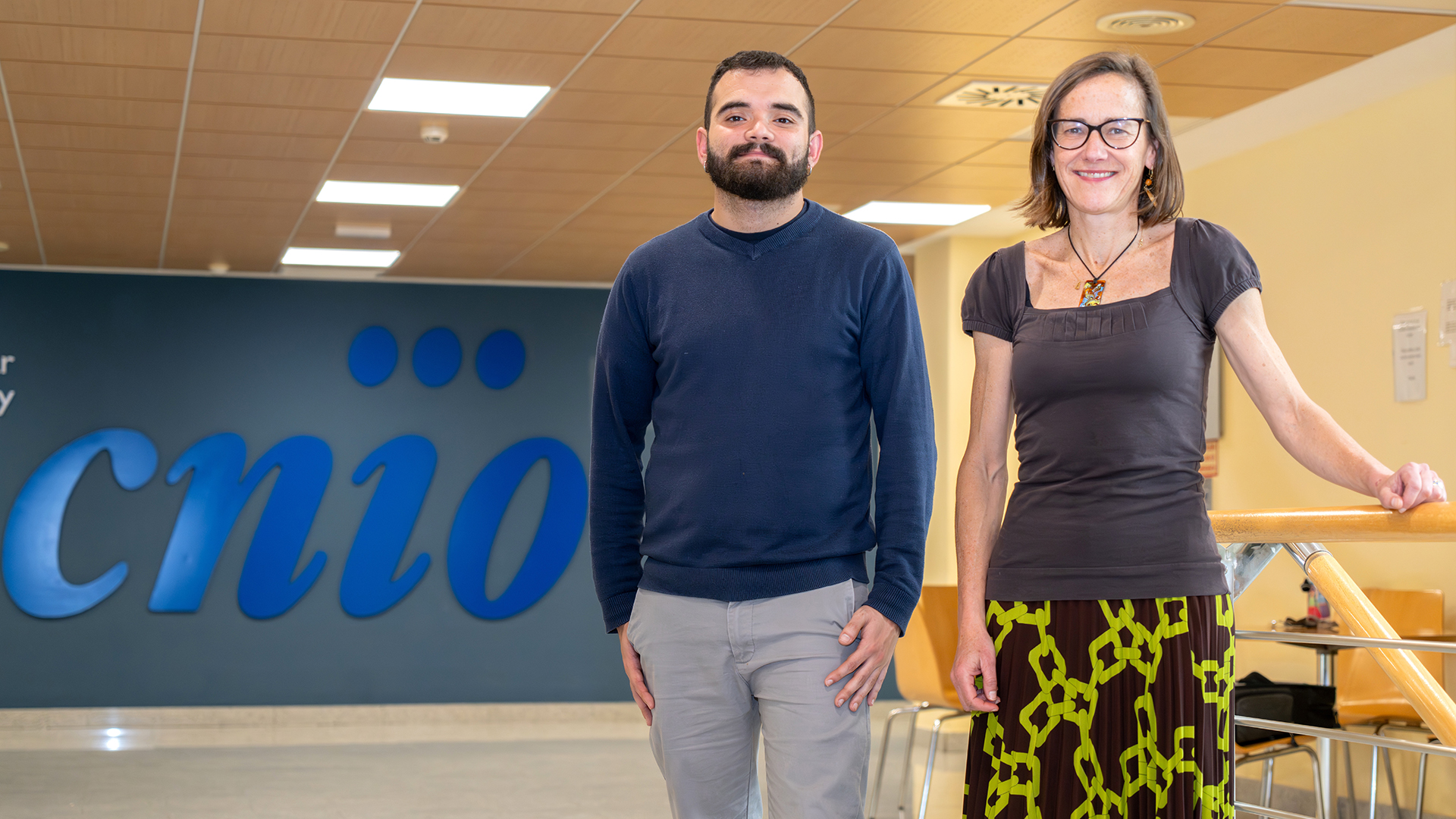
Eva González Suárez and Alejandro Collado / Credits: National Cancer Research Centre (CNIO)
And what have you discovered regarding the role played by RANK?
Alejandro (A): The main finding is that the RANK protein, known for its role in bones and the breast, is also essential for fertility. When we studied RANK in animals we saw that, without it, the reproductive axis is affected and the sex hormones (oestrogen and testosterone) are drastically reduced, impairing fertility in both females and males. Furthermore, we found mutations in the RANK gene in people with congenital hypogonadotropic hypogonadism, a rare condition associated with sexual development and infertility, underlining its importance in human fertility.
E.G.: Another key discovery is that this process is controlled by the microglia, cells from the brain’s immune system. Apart from eliminating damaged neurons and responding to infection, we’ve found they have another function: helping to regulate the neurons that release gonadotropins (GnRH) from the hypothalamus, which are responsible for controlling fertility. Specifically, RANK controls the microglia activity, affecting their communication with these neurons and their function. In short, we’ve discovered that a protein known for its role in other organs is also essential for controlling the brain system that regulates fertility.
Alejandro, what questions has this discovery answered and how did you come up with the answers?
A: It answers the question of how the onset of puberty and fertility are regulated in mammals. Although we knew that a network of neurons is involved in this process, the role played by the RANK protein was unknown, as was the fact that the immune system is also involved.
A combined approach was used to investigate this. First, we carried out studies on animal models by suppressing the RANK protein (in the whole body or in the microglia) to observe the effects on sexual development and fertility. Next, we analysed the genetic data from patients with a rare disease that causes infertility, identifying mutations in the same gene. And finally, we studied how the microglia communicate with these neurons to understand the mechanism that links the whole system.
Eva, what impact do you think this discovery will have on society?
E.G.: We’ve identified a new biological mechanism that connects the brain’s immune system to fertility. This opens the door to new diagnostic approaches, such as in congenital hypogonadotropic hypogonadism, a condition in which half of all cases have no known genetic cause, and in which we detected RANK mutations in 1% of the patients. In the long term, and with further research, this could help to develop treatments for infertility by modulating the immune system or the RANK pathway. It also paves the way to explore whether microglia regulate other functions of the hypothalamus, such as appetite, stress or body temperature, or conditions ranging from degenerative diseases to cancer.
As always, we’ll finish with a reflection on science and art. Eva, what do you think is the relationship between the two?
E.C.: Art and science are two sides of the same coin: humans’ need to understand the world. They’ve always been closely related. It was in the modern era, due to the specialisation of knowledge, when they came to be seen as separate disciplines. Today, that line has become blurred again. In creative industries such as animation and video games, being an artist requires a knowledge of mathematics, computing and programming, and teams include not only artists to guide the visual concept but also engineers and researchers to develop software capable of rendering realistic digital images, which often demands scientific knowledge and a thorough study of the subject to be depicted.