

The Age of Inflammation
Published on 25/06/2026

Lemon water; ginger, turmeric and cinnamon ‘shots’; a Mediterranean diet with matcha tea and kombucha; sleep routines and daily exercise; intermittent fasting; ice baths; even red light devices and walking barefoot to reconnect with the earth.
These are just a few from the long list of anti-inflammatory strategies that seems to be growing by the day. They promise to ward off not only cardiovascular disease, diabetes and cancer but also more everyday complaints such as tiredness, stress and general malaise. In recent years, inflammation has moved outside the laboratory to take its place in public discourse as one of the most recurring – and perhaps most promising – concepts in the health debate.
But what do we really know about inflammation? And, above all, what does it actually mean to say that something is ‘anti-inflammatory’? What scientific evidence supports these techniques? We spoke to Manuela Ferreira, a researcher specialising in the impact of diet on the immune system, to understand the current state of scientific research, the myths that are circulating, and how this concept is transforming both research and society’s perception of health.
A historical definition
The word ‘inflammation’ comes from the Latin verb inflammare, meaning ‘to set alight’. “The word itself is highly illustrative” explains Manuela Ferreira, “since inflammation usually manifests as heat, redness, swelling and pain, almost as if the tissue were on fire”.
But, beyond its symptoms, inflammation is essentially a defensive response. “It’s triggered when the body detects a threat: an infection, an injury or the presence of cells that need to be controlled or eliminated by the immune system” notes Ferreira.

Manuela Ferreira
There are two types of response depending on the duration: acute inflammation and chronic inflammation. “The former is a rapid, self-limiting response” explains Ferreira. It’s caused by wounds, mouth ulcers, infections, etc. “It appears within minutes or hours of the danger being detected and, once the problem is resolved, gradually subsides”.
“Chronic inflammation is different” points out Ferreira. “In some cases it can be almost silent, as is the case in certain metabolic conditions (such as obesity or diabetes) or cardiovascular disorders, when there’s a persistent, low-intensity state that can persist for years without any obvious symptoms being manifested but which, over time, ends up damaging tissues and causing disease. In other situations, however, chronic inflammation is highly symptomatic and clearly affects everyday life, as is the case with inflammatory bowel diseases, including Crohn’s disease and ulcerative colitis. Furthermore, in some contexts chronic inflammation can also promote the development or progression of certain types of cancer”.
In a contemporary context
Nutrition is probably one of the fields where the concept of ‘inflammation’ has gained most traction, albeit not always accompanied by advances in our biological understanding of it. This is logical, since diet is one of the most direct ways in which the environment interacts with our biology and influences our health.
“Scurvy is a clear example of this phenomenon” explains Ferreira. “In the past, during maritime expeditions, sailors would develop this serious disease caused by a lack of vitamin C. However, although it had already been observed that citrus fruits could prevent and treat scurvy, this nutritional explanation was ignored for centuries”.
Rather than asking whether certain foods directly ‘cause inflammation’ or ‘reduce inflammation’, current research is focusing on a more complex question. In their laboratory, Ferreira’s team is studying a specific aspect of this process, namely the role played by nutrients in the development of the gut’s defences during childhood.
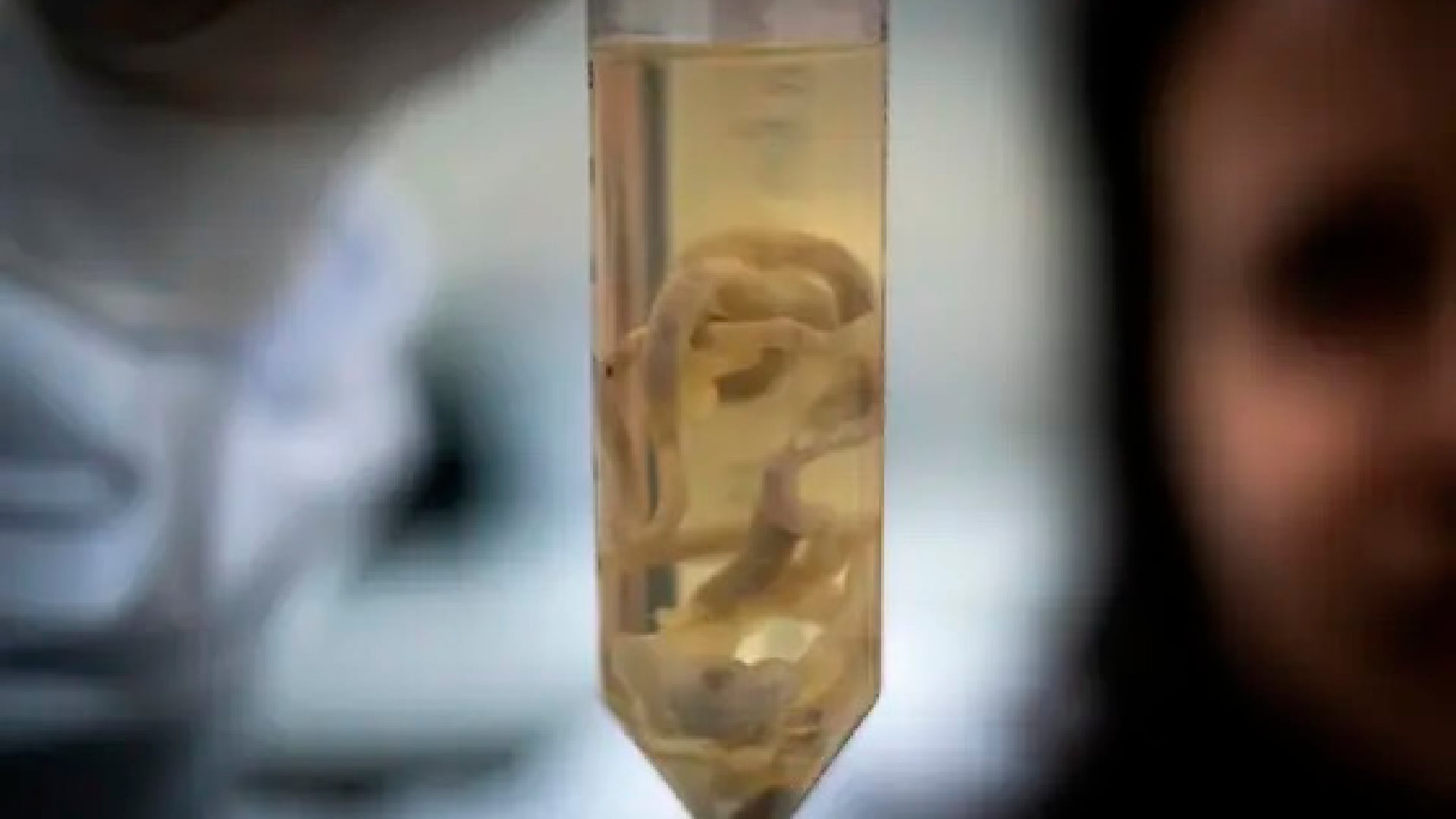
Sample of intestinal tissue preserved in a test tube.
Specifically, we’ve observed how these cells need to ‘read’ signals derived from vitamin A, such as retinoic acid, in order to develop correctly and perform their function”, she explains. “If these signals are not detected, the immune cells fail to establish themselves properly in the gut and, as a result, this tissue may be less able to control infections efficiently”.
On everyone’s lips
According to Ferreira, there are two complementary reasons for this rise in popularity of the term ‘inflammation’: on the one hand, the growth in scientific understanding of the importance of immunology in the body and, on the other, the power of inflammation as a popular concept.
“It’s a process of great biological importance. However, there’s a risk that the word becomes so useful that it starts to be used as a catch-all term for any ailment or imbalance” she warns. “And subsequently as something that seems to have a quick or even commercial solution”. This oversimplification gives rise to some of the most widespread myths in the field:
- Inflammation is always bad and must be eliminated. “Inflammation is essential for life”, Ferreira points out. “It enables us to fight infection, repair tissue and respond to damage. The problem isn’t that it exists but rather its persistence or activation in the wrong context”.
- Any symptom is a direct sign of inflammation. “Symptoms such as tiredness, digestive disorders or skin irritations may involve inflammatory pathways but not always, nor in the same way. From a scientific point of view, it’s essential to understand the tissue involved, the trigger and the duration of the process”.
- Inflammation can be resolved with one-off solutions. “There’s no single food (or superfood), supplement or ‘detox’ substance that can eliminate inflammation on its own” she states. “Diet does play a role. But what matters is the whole picture, not isolated ingredients”.
In Ferreira’s opinion, this is the main challenge presented by the so-called ‘Age of Inflammation’ in which we live: preserving the value of a concept that has transformed our understanding of health, but without turning it into a universal explanation for every ailment.
Beyond the label
If, in ten years’ time, we’re still talking about inflammation, Ferreira hopes it will be because we have a better grasp of the phenomenon and not due to greater concern. “I’d like us to move towards a stage in which we understand more fully how diet, sleep, exercise, stress, infections, pollution and social conditions shape our immune system” she explains.
At a time when social media and artificial intelligence offer immediate explanations for complex phenomena, the researcher believes that “this can have very positive effects because it makes more people aware of the science, but it can also encourage a superficial understanding of complex phenomena. That’s why it’s important to maintain a critical perspective: not every quick explanation is good, nor every immediate solution effective”.
“We need better questions, rigorous interpretations and research capable of delving deeper into the mechanisms that lie behind biological processes. And inflammation is a good example of this”.