

Snapshot of the month: «Intertwined Continuum»
Published on 20/11/2026
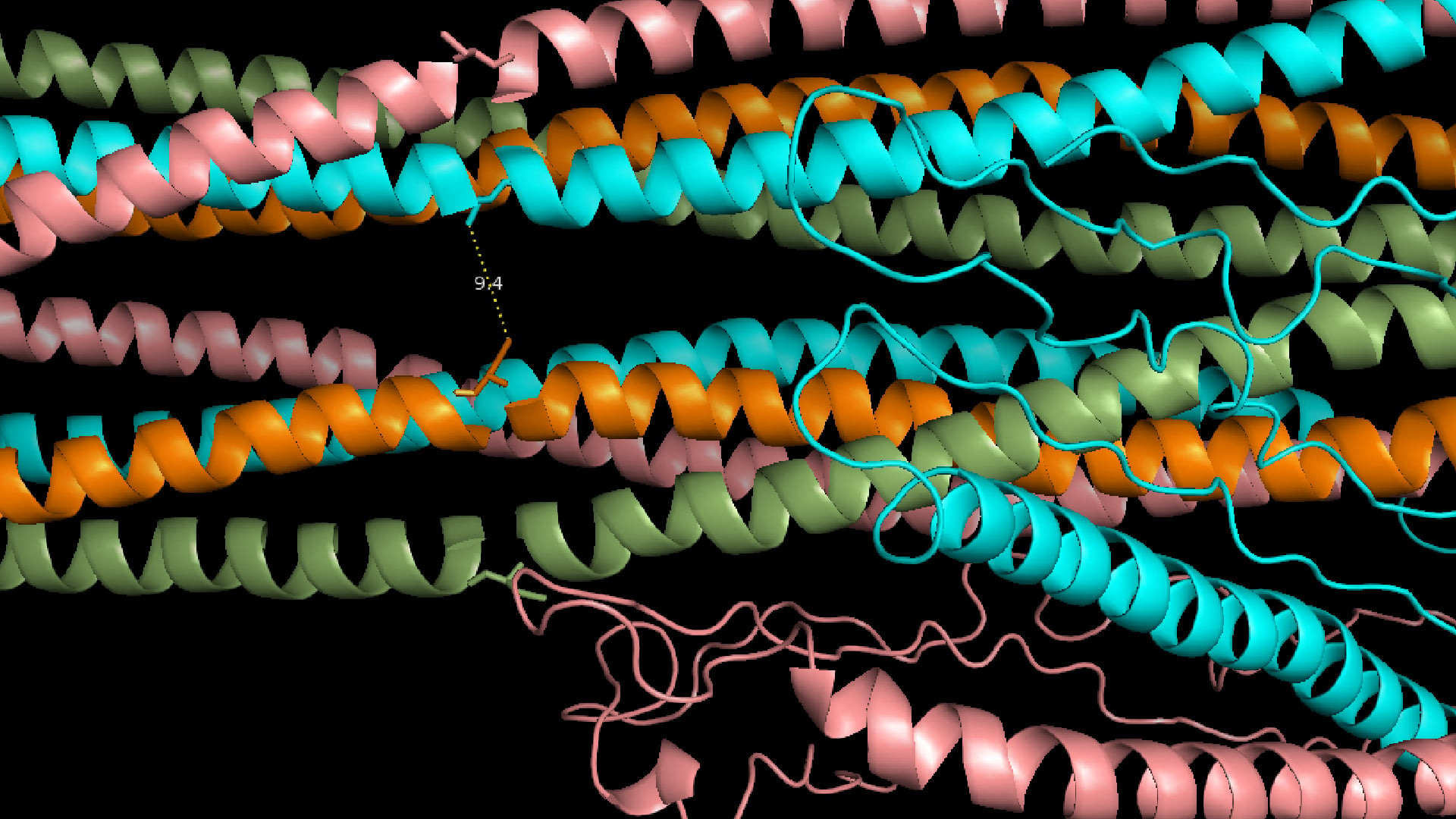
This month’s Snapshot is made up of spirals: coloured strands that coil and run parallel to one another, like a braided cable. Between them, a faint yellow dotted line spans a distance of less than one nanometre. Within that tiny space lies part of what science is seeking to understand: why certain mutations make an essential brain protein particularly vulnerable to oxidative stress in Alexander disease.
This is a rare neurodegenerative disorder that progressively damages the brain’s white matter and for which there’s currently no cure. It’s caused by mutations in the GFAP gene, a protein found in astrocytes, and its most severe forms affect children up to four years of age.
To analyse this image from two complementary perspectives, we’re joined by Marta Jiménez Arévalo, an architect, digital artist and ”la Caixa” Foundation fellow from the postgraduate fellowship abroad programme, and by Dolores Pérez-Sala, a researcher within our research community based at the Margarita Salas Centre for Biological Research (CIB-CSIC), lead author of the study published in the journal Redox Biology.
We’ll start with the artist.
Marta Jiménez Arévalo
Marta Jiménez Arévalo trained as an architect at ETSAM and at the Technische Universität Berlin. She later joined TBA21 Thyssen-Bornemisza Art Contemporary, where she specialised in interdisciplinary applied research practices. Today, thanks to a fellowship from “la Caixa” Foundation, she’s studying for a Master’s degree in Media Design at Keio University in Tokyo. There, in the quantum technologies lab, she’s working at the intersection between quantum theory, technology, philosophy and art.
Marta, which artwork or artist does this image remind you of?
Marta (M): Visually, and because of its dimensionality, it reminds me of Jenny Holzer’s work at the Guggenheim, an installation in which she uses language and poetry to alter the visitor’s spatial and emotional experience.
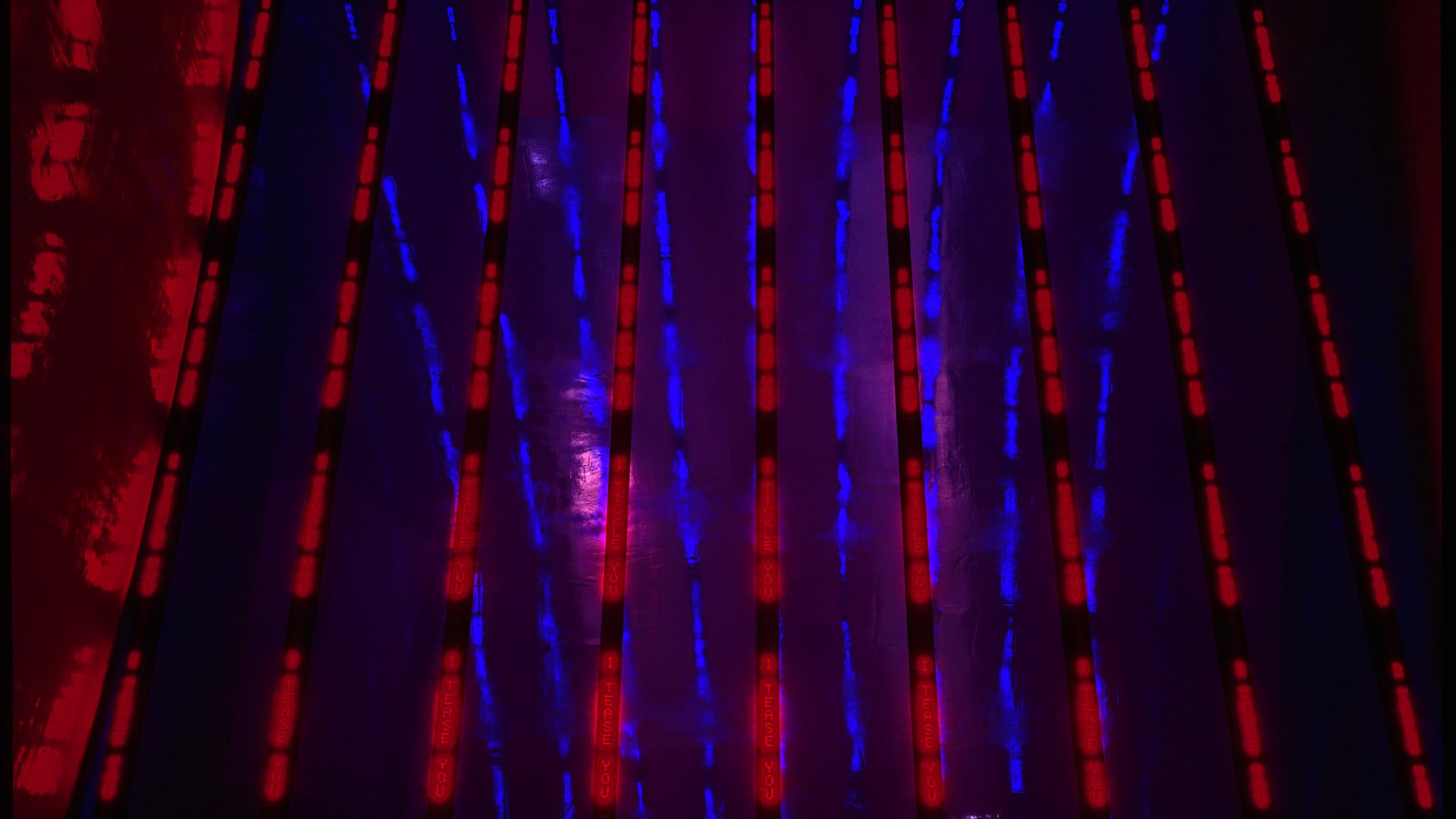
Installation for Bilbao (1997/2017) by Jenny Holzer. Source: Guggenheim Bilbao.
Conceptually, it evokes the superimposition of intertwined realities, and that leads me to the work of Korean artist Yunchul Kim, who explores the interplay between technology, philosophy, music and cosmology.
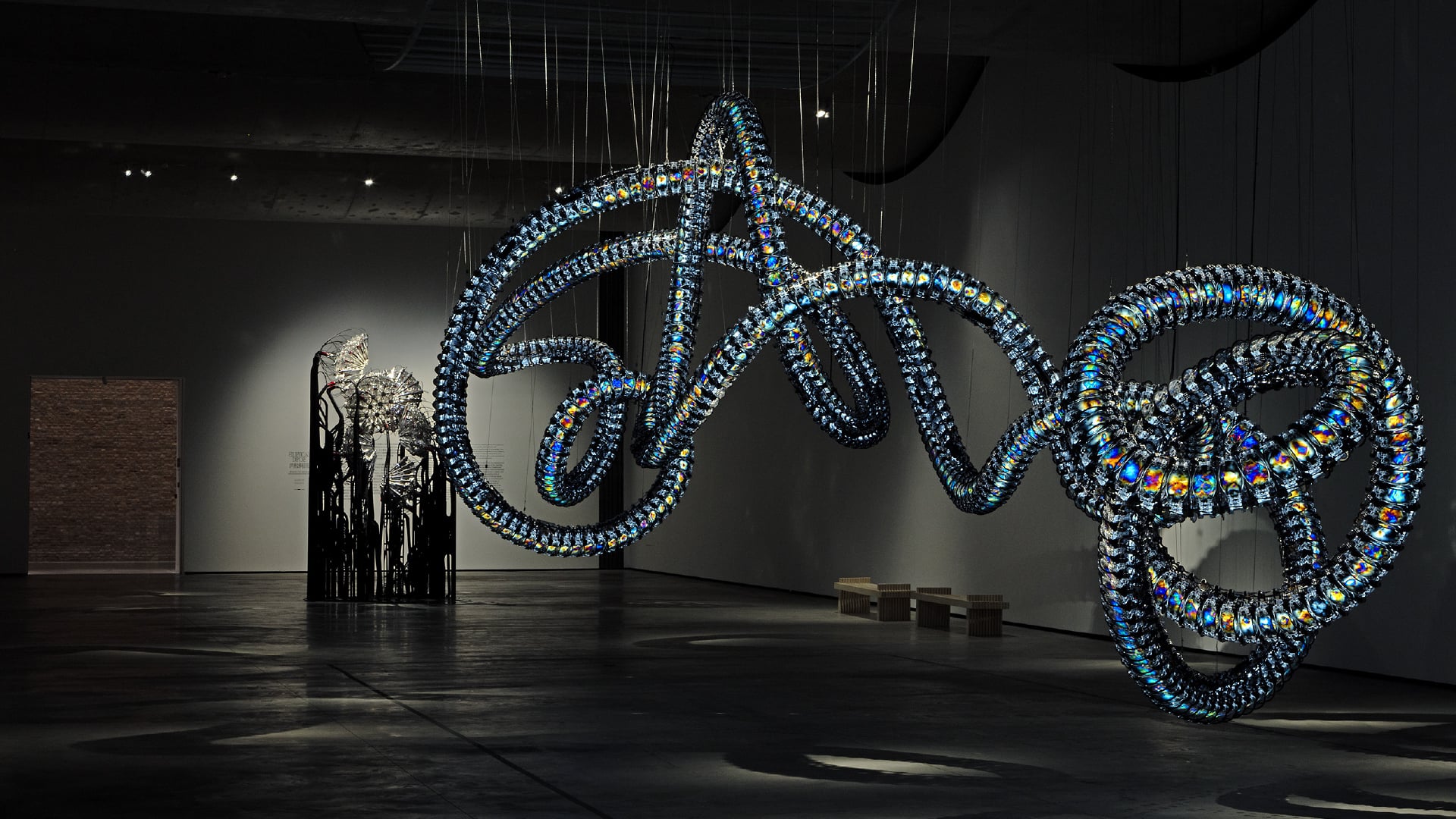
Chroma IX (2024) by Yunchul Kim. Source: Yunchul Kim.
What does it bring to mind for you?
M: It makes me think of time: without beginning or end, an intertwined continuum. It reminds me of the spiral as a representation of the cycle of life, cyclical time as a continuous development.
Over the past year and a half, I’ve been immersed in the quantum technology lab at Keio University. There, I’m studying what kinds of languages (verbal, symbolic, ritual, technical, emotional…) can bring us closer to quantum realities. This image makes me reflect on this once again: on alternative ways of contemplating reality that help us to better understand what quantum theory teaches us about the infinitely small.
We continue with the researcher.
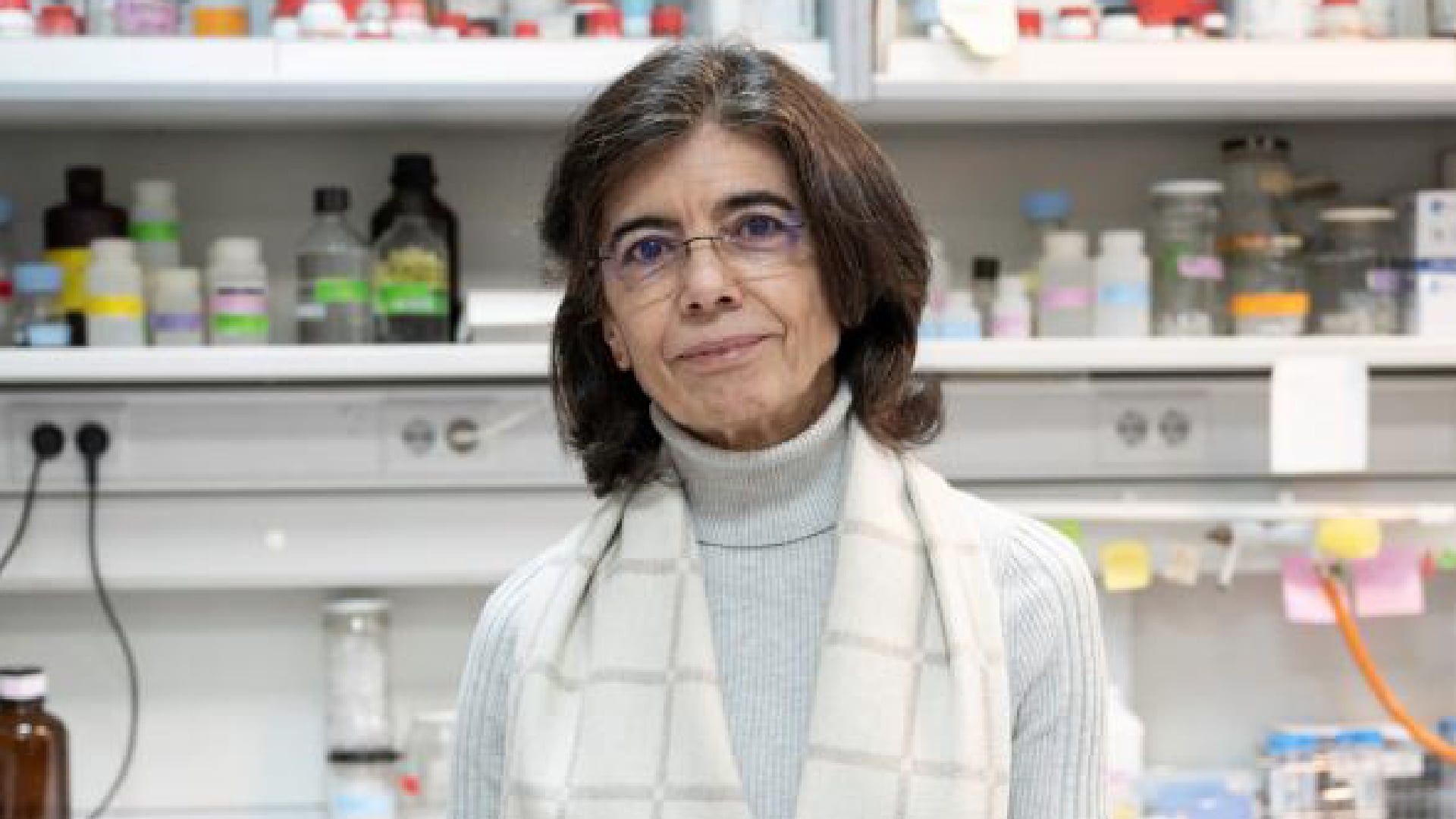
Dolores Pérez-Sala
Dolores, from a scientific perspective, what do these structures represent?
Dolores (D): We’re looking at a representation of the structure of a fragment from an intermediate filament of the cytoskeleton. Its architecture, resembling a cable made up of many protein chains, provides cells with strength and, at the same time, elasticity and the ability to respond to stress.
One of the proteins that make up intermediate filaments is GFAP, which is present in astrocytes and essential for these cells to function properly. When mutations occur in this protein, they cause the condition known as Alexander disease.
What problem does your discovery address, and how have you resolved it?
D: Our results indicate that these mutations, as well as altering the protein’s structure, may also increase its susceptibility to oxidative damage. The oxidation of GFAP alters the architecture of the filaments and promotes the formation of aggregates, which could worsen the disease.
In this study we used various mutated forms of GFAP, both purified and expressed in cells, and exposed them to oxidising agents produced by the body in response to stress. We observed that the most pathogenic mutations predispose the protein to more severe oxidation and, consequently, to impaired function.
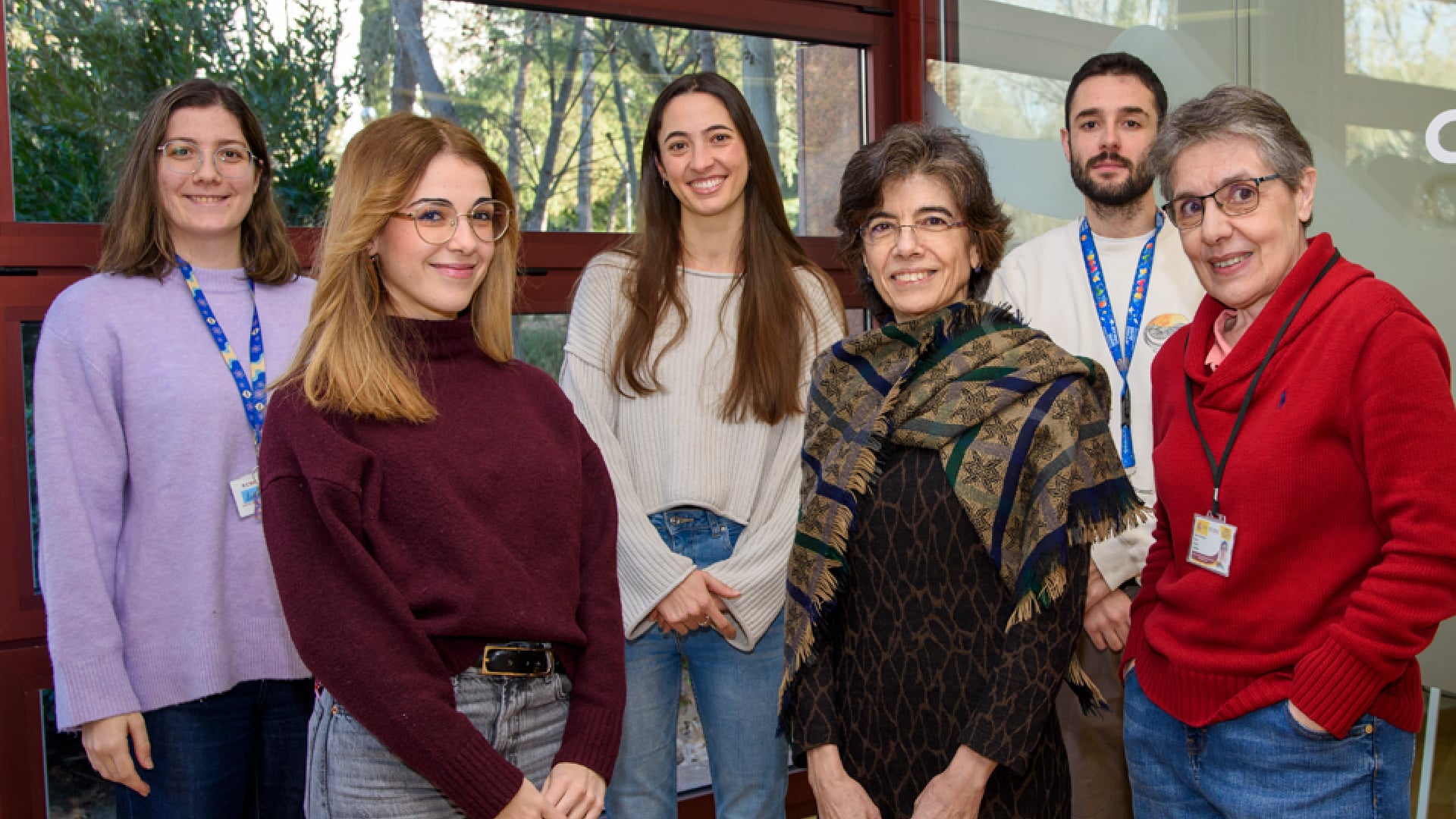
Team responsible for the study, from left to right: Laura McMahon Bueno, Paula Martínez Cenalmor, Nuria Goya Iglesias, Dolores Pérez-Sala, Diego Moneo Corcuera, María A. Pajares
What impact do you think this discovery will have on society?
D: It’s important to bear in mind that our study used purified proteins and cultured cells, which are models far removed from the clinical situation. Consequently, our results will need to be validated with in vivo models.
Even so, this discovery has provided an insight into the molecular mechanisms of the disease, bringing us closer to understanding why different types of mutations give rise to more or less severe forms of the condition. Furthermore, it provides a starting point for investigating whether reducing oxidative stress, through the use of antioxidants, could be a viable strategy for mitigating the impact of certain mutations in the functioning of GFAP filaments, thereby paving the way for treatments that improve the condition of patients.
Art and science are more closely linked than we tend to think. Marta, what do you believe connects the two?
M: In my view, both disciplines share the same root: the act of asking questions from which alternative answers may emerge. I believe a creative perspective is essential for exploring cognitive pathways through which new answers can be constructed, which are particularly necessary in critical times. Working at the intersection between art and science is important because it can help to cultivate new languages that enable us to engage with reality in radically different ways – languages that embrace uncertainty and non-binary, non-linear thinking.